
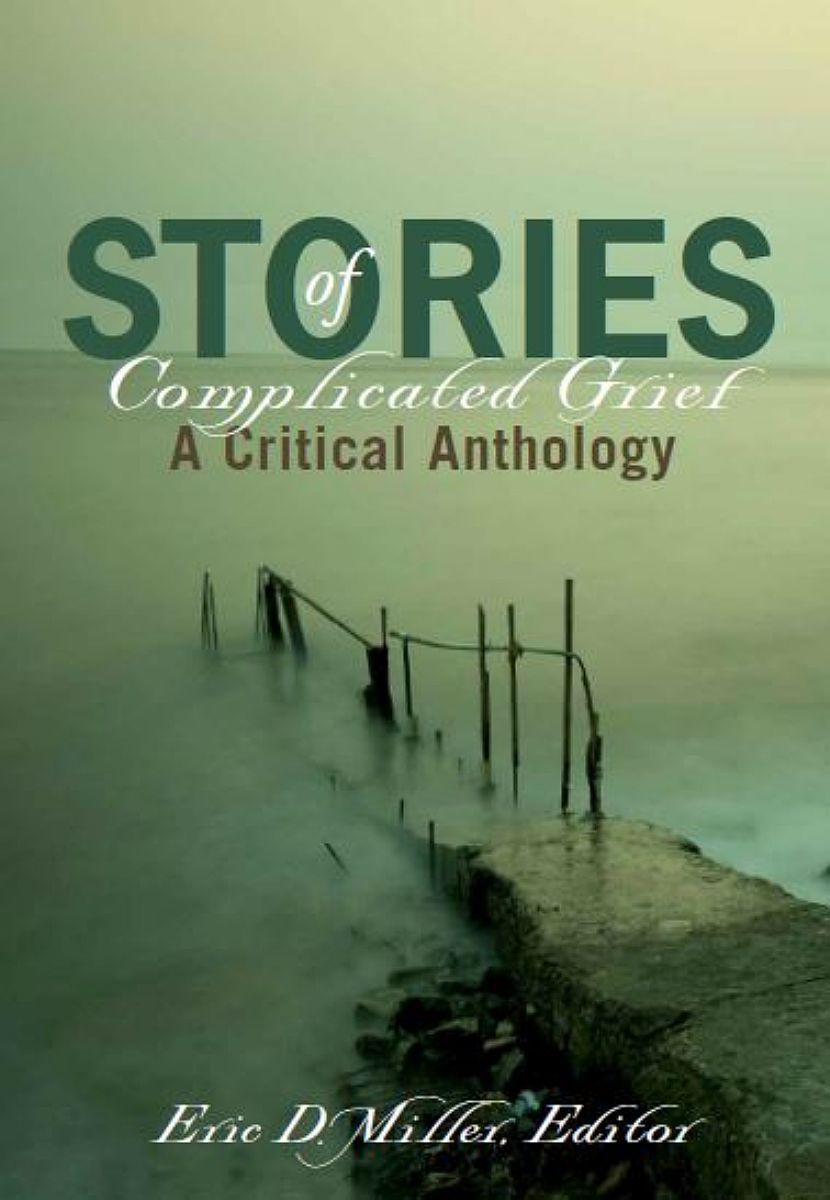
Stories of Complicated Grief
A Critical Anthology
Editor: Eric D. Miller
Page Count: 384
ISBN: 978-0-87101-448-1
Published: 2013
Item Number: 4481
$25.64
NASW members receive 10% discount on books and eBooks by entering their membership number at checkout.
Can your device download this eBook? Click here before purchasing! eBooks are available in single quantities only.
These are words commonly used to describe the range of emotions that individuals experience when dealing with the loss of a loved one, a chronic illness, or an unwanted life-changing event.
Grief is often a difficult issue for people to deal with, and there is no right or wrong way to grieve, but there are healthy ways to cope with loss. Stories of Complicated Grief: A Critical Anthology is authored by social work and other human service scholars who have personally experienced complicated, protracted, or otherwise difficult grief and who write openly about their experiences but also place their stories in a larger academic context. This is the sense in which the book constitutes a “critical anthology” and fills a void in the academic, clinical, and general literature.
The authors in this volume discuss how their experiences of loss and grief, though harrowing, ultimately allowed them degrees of personal growth and betterment – with particular emphasis on the importance of giving voice to one’s experience in writing. Powerful and moving as the stories are in their own right, they are notable in that they all highlight academic issues regarding the nature of loss and grief, shedding light on what it means to experience complicated grief while weaving in related topics such as cultural differences, stigma, shame, losses, and traumas other than death.
These accounts provide both clinical and practical insights on the nature of complicated grief for practitioners, researchers, and laypeople, making Stories of Complicated Grief an invaluable, unprecedented resource for clinicians, academics, and anyone grappling with the effects of complicated grief in their own life.
Preface: An Introduction to Complicated Grief and the Nature of This Book by Eric D. Miller
Acknowledgments
PART 1: When and How Is Grief “Complicated”?
Chapter 1: Seeking My Brother’s Voice: Holding onto Long-Term Grief through Photographs, Stories, and Reflections
Carolyn Ellis
Chapter 2: The Complications of Grief: The Battle to Define Modern Mourning
Leeat Granek
Chapter 3: The Betrayal That Was Love
Laura K. Kerr
Chapter 4: Tears and Tattoos: Complex Grief Revisited
Trish Staples
PART 2: Unresolved and Long-Lasting Grief
Chapter 5: The Rhetoric of Grief: When a Loved One You Have Never Loved Is Dying
Mary Lynn Navarro
Chapter 6: Luvandwar and Letting Go
Rose Richards
Chapter 7: Complicating Grief with Violence
Vanessa Russell
Chapter 8: Complicated Grief Endures
Elisabeth Hanscombe
PART 3: The Death or Physical Loss of One’s Child: Everlasting or Pathological Grief?
Chapter 9: When Time Stops: The Courage for Joy
Donna M. McDonald
Chapter 10: Communicative Coping with Ambiguous Death: The Search for Answers and Acceptance after the Death of a Child
Lynne M. Webb and Paige W. Toller
Chapter 11: The Lost Mother: A Refracted Memoir
Christina Houen
PART 4: The Effects of Intergenerational Grief
Chapter 12: Transgenerational Transmission of the Trauma of a Pogrom
Mildred Antonelli
Chapter 13: Writing through Grief
Rae Luckie
Chapter 14: Prolonged Grief Disorder in 3-D: An Emerging Portrait across Time and Space
James A. Wren
Chapter 15: Stories My Father Never Told Me
Olivia Sagan
PART 5: Cultural and Societal Constraints and Complications of Grief
Chapter 16: Scapegoating the Complicated Griever in a Toxic World
Kathleen J. Cassity
Chapter 17: Just Don’t Laugh
Parag Sharma
Chapter 18: My Brother’s Keeper
David F. Purnell
Chapter 19: A Constant Resuscitation of Trauma: The Ties between Technology and Complicated Grief
Jason Barr
Chapter 20: The Silent Grief of Women: An Emptying of the Soul
Annette Anderson-Engler
PART 6: Concluding Thoughts
Chapter 21: Concluding Thoughts
John H. Harvey
About the Editor
About the Contributors
Index
Eric D. Miller, PhD, is associate professor of psychology, Kent State University, East Liverpool, Ohio. He has published numerous papers examining various aspects of how adults cope with and adjust to loss and other adverse events. He was the sole author of the textbook The Psychology of Adjustment and Coping (BVT Publishing) and served as coeditor (along with John H. Harvey) of the book, Loss and Trauma: General and Close Relationship Perspectives (Taylor & Francis/Brunner-Routledge).
Annette Anderson-Engler, PhD, MSW, is a writer, academic, social worker, and mentor. Her area of focus is narrative analysis and the effects of grief, trauma, and loss on social, cultural, and collective identities. She developed the concept of “identity displacement” during her doctoral work, in which she examined the process of identify reconstruction through the shared meaning of stories. Dr. Anderson-Engler was awarded a three-year (2006 to 2008) scholarship from the Koerber Stiftung Foundation in Hamburg, Germany, where she participated in extensive research in storytelling dialogue and peace-building practices. She currently teaches in the Department of Social Work and Education at Salt Lake Community College in Salt Lake City, Utah.
Mildred Antonelli, PhD, practiced interpersonal psychoanalysis from the 1960s until 2000, when she belatedly discovered self-psychology and intersubjectivity. She began training at, and graduated from, the Institute for the Psychoanalytic Study of Subjectivity. She has worked with adults, adolescents, and children of all ages in a variety of settings, including private practice. For the past three decades, she has been working intensively with victims of trauma, including the trauma of complicated grief and bereavement. She has taught in the framework of interpersonal theory in psychology and education, in graduate and undergraduate university programs, and she has taught interpersonal theory privately. She has presented papers in the United States and abroad.
Jason Barr is a member of the Department of English at Blue Ridge Community College, in Weyers Cave, Virginia.
Kathleen J. Cassity, PhD, is associate professor of English and coordinator of First-Year Writing at Hawai’i Pacific University, Honolulu.
Carolyn Ellis is professor of communication and sociology at the University of South Florida. She has published five books and four edited collections, the most recent of which are The Ethnographic I: A Methodological Novel about Autoethnography; Revision: Autoethnographic Reflections on Life and Work; and Music Autoethnographies: Making Autoethnography Sing/Making Music Personal. She has published numerous articles, chapters, and personal stories situated in autoethnography and interpretive representations of qualitative research, many of them dealing with grief and loss. Her current research focuses on interactive interviews and collaborative witnessing with Holocaust survivors.
Leeat Granek, PhD, is assistant professor, Department of Public Health, Faculty of Health Sciences, Ben Gurion University of the Negev, Southern Israel. She is a health psychologist with expertise in the areas of grief and loss, women’s health, qualitative methods, and psycho-oncology. She has published her work extensively in academic journals, including Archives of Internal Medicine, Social Science and Medicine, and the Journal of Health Psychology, and in mainstream media publications, including the New York Times and Slate Magazine. Her current projects include examining the grief of oncologists over patient loss, bereavement follow-up care for cancer patients and their families, and the experiences of parents whose children have cancer.
Elisabeth Hanscombe, PhD, is a psychologist, a writer, and adjunct research associate, Swineburne Institute for Social Research, Melbourne, Australia. She completed her PhD in 2011 on the topic “Life Writing and the Desire for Revenge” and has published a number of short stories and essays in the areas of autobiography, psychoanalysis, testimony, trauma, and creative nonfiction in literary and psychotherapy journals and magazines throughout Australia and in the United States.
John H. Harvey, PhD, is professor emeritus of psychology, University of Iowa, Iowa City. He is a social psychologist with expertise in the study of loss and trauma and close relationships. He has authored nearly 200 papers or books throughout his career and serves as the current and founding editor of the Journal of Loss and Trauma.
Christina Houen, PhD, is an independent writer, researcher, and editor and adjunct research associate, Curtin University, Perth, Australia; she is reflections editor of the journal Life Writing (Routledge). Her thesis, being rewritten as a book, is a Deleuzian study of women’s desire. The loss of her young children by abduction is the source of her passion for life writing as healing.
Laura K. Kerr, PhD, is an independent scholar training as a psychotherapist. She has interests in Jungian (archetypal) psychology and trauma-informed psychotherapies and has trained at the CG Jung Institute of San Francisco and several community agencies providing trauma-informed care. Dr. Kerr has also designed and led workshops on the topics of trauma and self-stigma and their impact on living full, authentic lives. She has been affiliated with the Beatrice M. Bain Research Group at University of California, Berkeley and the Institute for Research on Women & Gender at Stanford University, and she taught at Stanford University. With V. Y. Mudimbe and Godé Iwele, she is editor of The Normal and Its Orders: Reading George Canguilhem (Editions Malaïka, 2007).
Rae Luckie, PhD, is a lecturer in education and coordinator of the Graduate Diploma in Education, University of Wollongong, Batemans Bay Campus, Australia, and teaches creative writing at Shoalhaven Campus. Dr. Luckie also works as a mentor and life writing consultant, facilitating projects in rural communities and schools. Her auto/biographical works are included in What is Mother Love? (2008), edited by Selwa Anthony; Illness in the Academy (2007), edited by Kimberley Myers; and Best Australian Stories 2004, edited by Frank Moorhouse.
Donna M. McDonald is an academic, social policy consultant, social worker, and writer. She is the convener for disability studies in the School of Human Services and Social Work, Griffith University, Brisbane, Australia, and undertakes consultancy projects in the area of social inclusion. Her publications on grief include Jack’s Story, her memoir written in the wake of the sudden infant death of her son, and an essay, “I Am a Mother,” published in MotherLove 2. She has also published several articles and book chapters about deafness and deaf people’s lives.
Mary Lynn Navarro is assistant professor, English Department, Kingsborough Community College, Brooklyn, New York. She has mentored and taught high school students in New York University’s Metro Center for Urban Education. Professor Navarro has also taught literature, composition- rhetoric, and English as a second language in many colleges of the City University of New York. At Metropolitan College of New York, Professor Navarro has taught and developed programs in English, literature, writing, language and culture, and ethnography.
David F. Purnell, MA, is a graduate student, University of South Florida, Tampa.
Rose Richards, MA, PhD, has an MA in English Literature, and her PhD (psychology) dissertation was on narrative and identity in organ failure and transplantation. After a considerable period of ill health, she underwent a kidney transplant in 1991, and these experiences form the basis of her doctoral work. Her other research includes illness narratives, identity studies, and teaching writing. She has published academic work and short stories. Some of her writing has appeared in Kunapipi: Journal of Postcolonial Writing, New Contrast, Qualitative Health Research, The South African Journal of Higher Education, and The Bed Book of Short Stories (Modaji Press, 2010). She works with university students (at Stellenbosch University, South Africa) to help them develop academic writing skills.
Vanessa Russell, PhD, is a graduate of the English Literature and Creative Writing Program, University of Melbourne, Australia. Her first novel, Holy Bible, was published by Sleepers in 2013. She has a memoir coming out through Hardie Grant in 2014 about getting into, and getting out of, an abusive relationship and then being served with the Hague Convention.
Olivia Sagan, PhD, is academic co-ordinator for psychology, Bishop Grosseteste University, Lincoln, England. She has published widely on the subject of her research, the phenomenological narrative exploration of mental illness and artistic practice. Currently, she is preparing a book titled Narratives of Art Practice & Well-Being: Connection and Reparation, to be published by Routledge in 2014.
Parag Sharma is the pseudonym of an assistant professor of English at an American university.
Trish Staples, MA, MEd, is a qualified teacher and counselor living in the United Kingdom and has more than 35 years of experience working in education, health, and volunteer sectors. A diagnosis of multiple sclerosis in 1991 and other significant losses in Dr. Staples’s adulthood led to her involvement with various organizations, in which she used learning, skills, and knowledge evolving from her experiences to inform and support others facing similar situations. Her master’s dissertation embraced an integrative, qualitative exploration of wounded healers working with bereaved clients.
Paige W. Toller, PhD, is assistant professor, School of Communication, University of Nebraska–Omaha. She has published articles in the Journal of Applied Communication Research, Sex Roles, Communication Studies, Iowa Journal of Communication, and Southern Journal of Communication. She is on the editorial board for the Journal of Applied Communication Research. Her research primarily focuses on communication and parental bereavement.
Lynne M. Webb, PhD, is professor, Department of Communication University of Arkansas, Fayetteville. She previously served as a tenured faculty member at the Universities of Florida and Memphis. She has published articles in multiple journals, including the Journal of Family Communication, the Journal of Applied Communication Research, the Journal of Health Communication, and the International Journal of Social Research and Methodology. She is coeditor of Communication for Families in Crisis and Computer-Mediated Communication in Personal Relationships. Her research focuses on young adults’ interpersonal communication in romantic and family contexts.
James A. Wren, PhD, DPhil, DSc, holds his PhD in comparative literature from the University of Washington, his DPhil in modern Japanese literature and cultural studies from Niigata University (Japan), and his DSc in immunogenetics from the Chinese University of Mining and Technology (People’s Republic of China). Having widely published on the areas of modern Japanese and Indonesian literature, as well as in medical history and narrative, he has taught at Rhodes College and the University of Hawai’i. He retired from his post as professor of Modern Japanese Literature at San Jose State University to address the ravages of lupus and Parkinson’s disease.
I consider myself to be quite fortunate to have come across the call for book proposals from NASW Press that included an interest in the study of loss and grief. As an academic psychologist who studies and writes about grief, loss, and adjustment to adverse life events, I find the question about how to understand complicated grief to be one that has profound academic, clinical, practical, and personal implications for most individuals. Psychology and related fields, such as social work, have long considered how “best” to construe grief. Initially, the inability to move on from grief was widely thought of as pathological. Particularly in the latter decades of the 20th century, there has been a backlash of sorts against this perspective that sought to understand grief as a more normal part of the natural life cycle. However, concurrently, there has been more of a focus on the nature of complicated grief. For an excellent overview of this history, I would especially refer readers to chapter 2 of this anthology.
Complicated grief (which is sometimes known as prolonged grief disorder) is generally viewed as a form of grief that affects a subset of those who have lost a loved one. Such individuals tend to have more severe grief reactions, such as intense yearning and longing for the deceased; not accepting the death; feeling numb, angry, bleak, or agitated about oneself or life; and not trusting others (for example, Prigerson & Maciejewski, 2005). Simon and colleagues (2011) suggested that a commonly used measure of complicated grief, the Inventory of Complicated Grief scale, appears to have six distinct components: yearning and preoccupation with the deceased, anger and bitterness, shock and disbelief, estrangement from others, hallucinations of the deceased and distinct behavioral changes within the individual.
Although there is not an absolute consensus about this point, some scholars and clinicians believe that this form of grief should be recognized as its own unique mental disorder in the Diagnostic and Statistical Manual of Mental Disorders (DSM). In fact, at the time of this writing, the American Psychiatric Association (APA) is proposing the inclusion of complicated grief as a disorder in the DSM-5. If included, this disorder would be marked by the following symptoms according to APA (2012):
A. The development of emotional or behavioral symptoms in response to an identifiable stressor(s) occurring within three months of the onset of the stressor(s). In the case of the Related to Bereavement Subtype, 12 months of symptoms (or six months for children) are required after the death of a close family member or close friend.
B. These symptoms or behaviors are clinically significant, as evidenced by one or both of the following:
- marked distress that is in excess of what would be proportionate to the stressor, taking into account the external context and the cultural factors that might influence symptom severity and presentation
- significant impairment in social, occupational, or other important areas of functioning
C. The stress-related disturbance does not meet the criteria for another mental disorder and is not merely an exacerbation of a pre-existing mental disorder.
D. Once the stressor, or its consequences, has terminated, the symptoms do not persist for more than an additional six months.
Indeed, there is a growing chorus of scholars, researchers, and clinicians who have been arguing that considerable evidence has been building over the past several decades indicating that complicated grief truly is associated with a unique symptomatology that requires its own particular clinical intervention (for example, Neimeyer, 2005/2006; Shear & Frank, 2006). Though this research question continues as the DSM-5 is set to be released in 2013, there is also growing evidence that complicated grief appears not to be synonymous with the well-established disorders of depression and posttraumatic stress disorder (for example, Bonanno et al., 2007). Even if we assume that complicated grief is a unique condition, Lobb et al. (2010) add that there are many factors, such as one’s psychiatric history, previous exposure to loss and trauma, and circumstances surrounding the nature of the death itself (for example, whether it was violent) and the relationship the bereaved had with their deceased loved one (for example, the level of closeness), that might predict the likelihood of its occurrence.
However, there are serious ramifications to the debate surrounding the nature of complicated grief and whether it should be formally recognized as a psychological or psychiatric disorder. On one hand, there is growing evidence that some individuals truly do suffer more psychological distress after a major loss. And, indeed, it is also known that all losses have their own unique qualities depending on the nature of the individuals involved and their social-environmental contexts. Sociologist and death studies scholar Tony Walter (2006) very nicely summarized this sentiment by noting:
Complicated grief is a multidimensional phenomenon that exists within and is negotiated through the power relationships that link researchers, clinicians, reimbursers, clients, and families. Grief – like madness, trauma, homicide, sexuality, and homosexuality – exists, but how we normalize and pathologize it is a social construct. Homosexuality, for example, has been seen as sin, as disease, and as personal choice. Grief too has been seen in a variety of ways. Complicated grief is one way; it is a social construct, and a highly complicated one! . . . [T]he roots of complicated grief lie not just in the individual mourner’s psyche, but also in the concern of family and friends to reduce suffering, to get the mourner back to autonomy and happiness, to reduce their own inconvenience and worry, to replace chaos and guilt with order and predictability. Without such concern, there would be no concept of complicated grief. There are other roots in normalizing psychiatry and the organizational needs of bereavement agencies. It is such things that lead us to see some grief as uncomplicated, and some as complicated. Complicated grief is a function of our concern as much as of the mourner’s psychology, and can be understood only as an interaction between the two. (pp. 77-78)
In essence, Walter (2006) highlighted and cautioned that grief, much less complicated grief, is at least somewhat understood by what society views as advantageous or detrimental to our well-being. Certainly, there can be little argument that society should work to help those who are suffering in trying to cope with loss. However, there is a larger question of the broader consequences of recognizing complicated grief as a form of pathology.
Dennis Saleebey’s (2011) work on the strengths perspective has had much impact on the field of social work, in particular. In brief, this perspective holds that individuals, clinicians, and society should work to highlight personal strengths and to adopt a resilient spirit even in the wake of personal setbacks and adversity. This view seeks to de-emphasize the role of pathology and emphasize the role of normalcy of life experiences. Interestingly, the field of psychology has seen the rise of a similar perspective with the development of the positive psychology movement (for example, Seligman & Csikszentmihalyi, 2000). An important related – though subtle – theme that has been previously advanced is that it is possible to showcase personal strength in the wake of (or maybe even due to) adversity and loss (for example, Miller & Harvey, 2001). In fact, there is some evidence that a lifetime history replete with a moderate level of adversity may benefit mental health and well-being more so than very little exposure to such life challenges (Seery, Holman, & Silver, 2010).
Readers of this anthology will quickly discover that virtually all of the chapters detail personal accounts and stories from individuals who poignantly discuss how their experiences of loss and grief – with particular emphasis on the ability to give voice to these narratives through writing – allowed for some degree of personal growth and betterment. In doing so, these accounts definitely should raise questions regarding the wisdom of labeling complicated grief as pathological. If one’s grief is so severe that one is considering, for instance, suicide, it is hard to defend a view that some form of psychological or psychiatric intervention is not really necessary. However, the possibility that individuals may look at life-altering adverse events as a means to allow for insights and growth that otherwise may not have been possible should not be ignored. Readers of this volume will find that many authors have eloquently argued that it is almost impossible (and perhaps even undesirable) to detach experiences of loss and grief from the self.
This preface opened with an acknowledgment that grief has been largely thought of as an abnormal reaction and something to move on from as swiftly as possible. Since at least the 1980s, several scholars have chipped away at this notion by exposing various common (and largely incorrect) societal myths of loss (for example, Wortman & Silver, 1989). In some ways, the basic question of whether complicated grief will be viewed as a mental disorder by APA may be irrelevant. A more significant question to entertain is whether mental health fields return to the earlier aforesaid view of grief. Such a return to this theoretical perspective truly would be a loss. There is a voluminous literature that highlights how society still often holds many stigmas against the mentally ill, who, in turn, often internalize these negative attitudes (for example, Rüsch, Corrigan, Todd, & Bodenhausen, 2010). It bears to reason that new categories of mental illness associated with grief may further exacerbate related stigmas. Doka (1989, 2002) established that grief can be disenfranchised such that society (in general) does not recognize one’s loss as such; for instance, there is evidence that certain forms of bereavement, such as suicide, are more likely to carry a sense of stigma (for example, Feigelman, Gorman, & Jordan, 2009).
Given these very real concerns, it is unclear whether complicated grief is to be viewed as a form of mental illness and whether this will make individuals even less likely to share their stories of loss and grief. Perhaps bereaved individuals may develop a sense that only troubled individuals feel grief. Clearly, much work has been done, particularly in the 1990s, to establish how experiences of loss and grief should be viewed as a normative life experience (for instance, Klass, Silverman, & Nickman, 1996). Although much care and latitude should be allowed in the expression of grief, it is also understandable that we might try to mitigate personal suffering associated with a given loss. Looking ahead, the challenge will be how to allow for the realization of these two (often conflicting) goals.
The General Nature and Organization of This Book
I did not want this book to be a mere discussion about the nature of complicated grief among scholars who primarily research this issue. Although such a project would be a noble endeavor, I wanted to collect stories from individuals – mostly academics – who were willing to write about their own stories of complicated grief while also giving some larger academic and theoretical background to the issues contained in their respective chapters. In order to allow for this book to be a success, I knew that I would require many quality proposals from scholars who had the two aforementioned basic characteristics. Although I had a couple of possible contributors in mind when I proposed this book, I also knew that I required a much larger pool of possible chapters. Further, I wanted to feature accounts from individuals from a wide array of academic disciplines. To that end, I posted a call for contributors” on the Web site H-Net: Humanities and Social Sciences Online (http://www.h-net.org). The precise wording used was as follows (and please note that I explicitly invited and encouraged development on a wide variety of topics):
I am looking for personal accounts from individuals who may have experienced various forms of complicated grief and are willing to write a chapter about their experience. Ideally, potential contributors will be able to draw from some academic literature in areas such as psychology, social work, and other related fields in their papers. However, particularly powerful accounts from those outside psychology and related fields will most certainly be considered. Papers that can offer a creative synthesis of personal narratives with an academic tone are especially encouraged. Clinical accounts will also be considered.
Papers that highlight a wide swath and diversity of topics are sought. Such examples can include, but are not limited to, complicated grief due to or related to: either an extremely close, poor, or conflicting relationship with the deceased, loss due to various forms of violence, complex situations or dynamics surrounding the death, previous losses contributing to challenges of bereavement, regrets over actions (or inactions) taken prior to the loss, or other sudden or expected losses. I would also welcome papers from those who may have experienced potentially difficult aspects of a grief experience and did not show severe grief symptoms.
Once more, I knew that for this proposed book to be a success, I would need to have several high-quality abstracts from individuals who were willing and able to write about their own losses while still maintaining an academic tone (or at least had a willingness to explore academic issues within the body of their respective papers). I was overwhelmed with the number of high-quality abstracts I received. Less than one month after posting my call for contributors, I felt that I had sufficient material to proceed with a proposal for this anthology.
I would suggest that the ability to write an account about one’s own experiences with loss (particularly complicated or traumatic loss) is extremely challenging and admirable in its own right. There is a very lengthy and important literature that highlights the significance and functions, including great physiological and psychological benefits, of writing stories and offering one’s accounts; many chapters in this anthology further discuss and elaborate on this point. If nothing else, the accounts featured in this collection have the potential to offer more clinical and practical insight on the nature of (complicated) grief for practitioners, researchers, and laypeople alike. Again though, these stories – as powerful and moving as they are in their own right – are unique in that they all attempt to highlight academic issues regarding the nature of loss and grief. It is hoped that this anthology will help to shed some additional light on what it means to experience complicated grief by presenting the stories of those who have endured such losses. Each chapter also weaves in many other related topics (for example, cultural differences, stigma and shame, and loss or trauma other than death).
Readers of this anthology will find six distinct sections. Before each section, I have offered some brief commentary designed to introduce both the nature of the section itself and an abstract of each of the chapters contained within each respective section. The first section of this book is titled “When and How Is Grief ‘Complicated’?” and is designed to introduce some basic issues about grief, complicated grief, and the use of writing as a means of coping with loss. The next three sections, all in their own unique ways, make a clear case for why and how grief is often a lifelong process that becomes enmeshed with one’s sense of self. The second section, “Unresolved and Long-Lasting Grief,” explores many accounts of grief that, for a number of disparate reasons, has never really abated with the passage of time. The third section, “The Death or Physical Loss of One’s Child: Everlasting or Pathological Grief?” illuminates this aforementioned theme with a focus on a form of loss that is commonly construed as one of the most profoundly devastating events that one can experience. The fourth section, “The Effects of Intergenerational Grief,” explores how grief can be transmitted across generations within families. The fifth section, titled “Cultural and Societal Constraints and Complications of Grief,” examines a number of cultural and societal factors that can make grief complicated. Taken together, these chapters raise some serious questions about the rationale and consequences of viewing complicated grief as a form of mental disorder. The final section is titled “Concluding Thoughts,” by John H. Harvey. Harvey has helped immensely to shape and direct our understanding of loss by stressing both its everyday and applied importance to the lives of individuals during the lifespan as well as the healing role of writing and sharing accounts as a means of making sense of one’s loss (for example, Harvey, 2000). His instructive comments and analysis of these chapters should be of great value to readers of this book.
Let me offer some comments to prospective readers of this book. This book should have a natural appeal for those in psychology and social work. I am very mindful of the fact that, as an academic psychologist, I am writing this book in conjunction with NASW Press, which is a division of the National Association of Social Workers. Given that NASW Press strives to incorporate scholarship across the social sciences, I felt very comfortable publishing this work with this particular publisher because this anthology bridges many disparate fields. In fact, I am very proud of the very strong interdisciplinary (or multidisciplinary) flavor of this book. The diversity of academic backgrounds and general perspectives from the included contributors further helps to underscore the very strong multidisciplinary components of this book.
Even so, let me address any readers from the field of social work who might question how or why this book, edited by an academic psychologist, could represent the field of social work fairly. Zastrow (2009) suggested that there are five basic goals of social work:
(1) Enhance the problem-solving, coping, and developmental capacities of people; (2) link people with systems that provide them with resources, services, and opportunities; (3) promote the effectiveness and humane operation of systems that provide people with resources and services; (4) develop and improve social policy; and (5) promote human and community well-being. (p. 38)
I would suggest that this basic topic and this anthology (more specifically) address all five of these goals. Clearly, most of these chapters involve a consideration of coping methods (goal 1) and how to achieve well-being from either an individual or community level (goal 5). Many of also give serious consideration to and analysis of various societal systems that can either facilitate or worsen grief (goals 2 and 3). Finally, the larger question of the consequences of viewing complicated grief as a form of mental illness will certainly affect social policies related to this issue (goal 4). There may be different interpretations of the nature (or existence of) complicated grief across the major mental health fields (for example, social work, psychology, psychiatry). However, all of these fields should necessarily be concerned with how individuals tell their stories of (complicated) grief, in part, as a means of understanding the nature of such grief.
Let me also add that this book could be of great interest to those in other social and health science fields, such as communication, sociology, and nursing. Given the very strong use of narratives, I suspect that those in humanities-based fields will also find much potential merit in this collection. I am also proud of the very strong applied aspect of this book: After all, this book fundamentally is about the stories contained within it. Anyone who has an interest in grief and loss – including those who have personally endured such experiences – may find this book personally helpful. It is hoped that this book will also find a larger, more general (lay) audience of readers as well. Further, this book could be used as a primary or secondary text in a number of undergraduate, graduate, or professional programs or classes (for example, courses pertaining to death and dying, grief, narrative writing, and mental health).
To the best of my knowledge, I am unaware of any books with the particular focus of this anthology. Although there are some books that feature a single author’s reflection on his or her own (complicated) grief, there are fewer that seek to highlight select narratives conducted by researchers who primarily use them to showcase broader themes of loss or grief. Furthermore, there are few books primarily authored by scholars who have personally experienced complicated, difficult, or protracted grief and are willing to openly write about their experiences while also placing their stories into a larger academic context. Frankly, I believe that a book of this nature – that is, a critical anthology – helps to fill a significant void in the academic, clinical, and general literature.
I would like to conclude by again thanking all of the authors in this anthology for submitting their works and giving me the honor of editing their works. Throughout this process, I never lost sight of the fact that this book was much more than a mere collection of theories, intellectual debates, and sets of data. I was entrusted to help to tell all of the stories contained within this book. I hope that this book gives these courageous stories the just forum that they all deserve. I suspect that there may be readers of this book who at some point may find solace in their own grief – complicated or not – after reading some of these stories. Perhaps these stories can help to teach such individuals that it is possible to experience great loss and to survive it, and perhaps even give voice to it through writing.
Eric D. Miller
Postscript
I have written this postscript just a couple of months after finishing my preface to the book. Frankly, this postscript is one that I would have rather not had to write insomuch as it reflects on a horrific event: the mass shootings that occurred on December 14, 2012, in Newtown, Connecticut, at the Sandy Hook Elementary School. Although the investigation of these shootings was ongoing at the time of this writing, a heavily armed gunman shot his way into this elementary school on that day; once inside, 20 first-graders and six school staff members and teachers were senselessly murdered within minutes.
There is almost an unspeakable aspect to this tragedy in that the trauma associated with it became palpable to the world. All of these deaths are tragic—and almost beyond words. However, there is one death from this tragedy that I would like to briefly highlight: the death of six-year-old Noah Pozner. The deaths of all of these children are unimaginably shocking—but there were some aspects about Noah’s death that seemed particularly haunting to me. Perhaps it was that Noah was the youngest of all the victims. I considered that he seemed to share similar personal attributes with my own sons (particularly when they were around Noah’s age). Ultimately, there is the very troubling and unsettling way that Noah died. Although all of these deaths are beyond disturbing, it has not gone unnoticed that Noah was shot the most times of all of the victims, 11 in all, and at close range. In an interview that Noah’s mother, Veronique Pozner, gave with The Jewish Daily Forward reporter Naomi Zeveloff (“Wrestling With Details of Noah Pozner’s Killing,” 2013), it was revealed that Noah’s “jaw and his left hand were mostly gone.” In the article, Zeveloff revealed her reluctance to first publish Ms. Pozner’s account of viewing her son’s body. But, ultimately, she said the decision to do so was consistent with Ms. Pozner’s wishes. Veronique Pozner was quoted as saying:
“We all saw how beautiful he was. He had thick, shiny hair, beautiful long eyelashes that rested on his cheeks. He looked like he was sleeping. But the reality of it was under the cloth he had covering his mouth; there was no mouth left. His jaw was blown away. I just want people to know the ugliness of it so we don’t talk about it abstractly, like these little angels just went to heaven. No. They were butchered. They were brutalized. And that is what haunts me at night.”
Soon after this tragedy, many important issues were highlighted by the popular press, political figures, and public health experts—chief among them were questions about access to guns and general mental health care. Although these are indeed important debates to have, the Sandy Hook killings also suggest how difficult it is for society to honestly look at the rawness and cruelty of death, as noted in Ms. Pozner’s account. It also again highlights how difficult it can be to grasp the difference between complicated grief and trauma and depression. It is almost incomprehensible to imagine sending a young child to school and later finding out that he or she is dead, and then to view and bury that child hours or days later. One could say that the “normal” reaction in such a case might be symptoms associated with complicated grief. The trauma associated with the Sandy Hook shootings, particularly among the families most directly affected by the tragedy, underscores the urgency and relevance of the conversations highlighted in this book.