
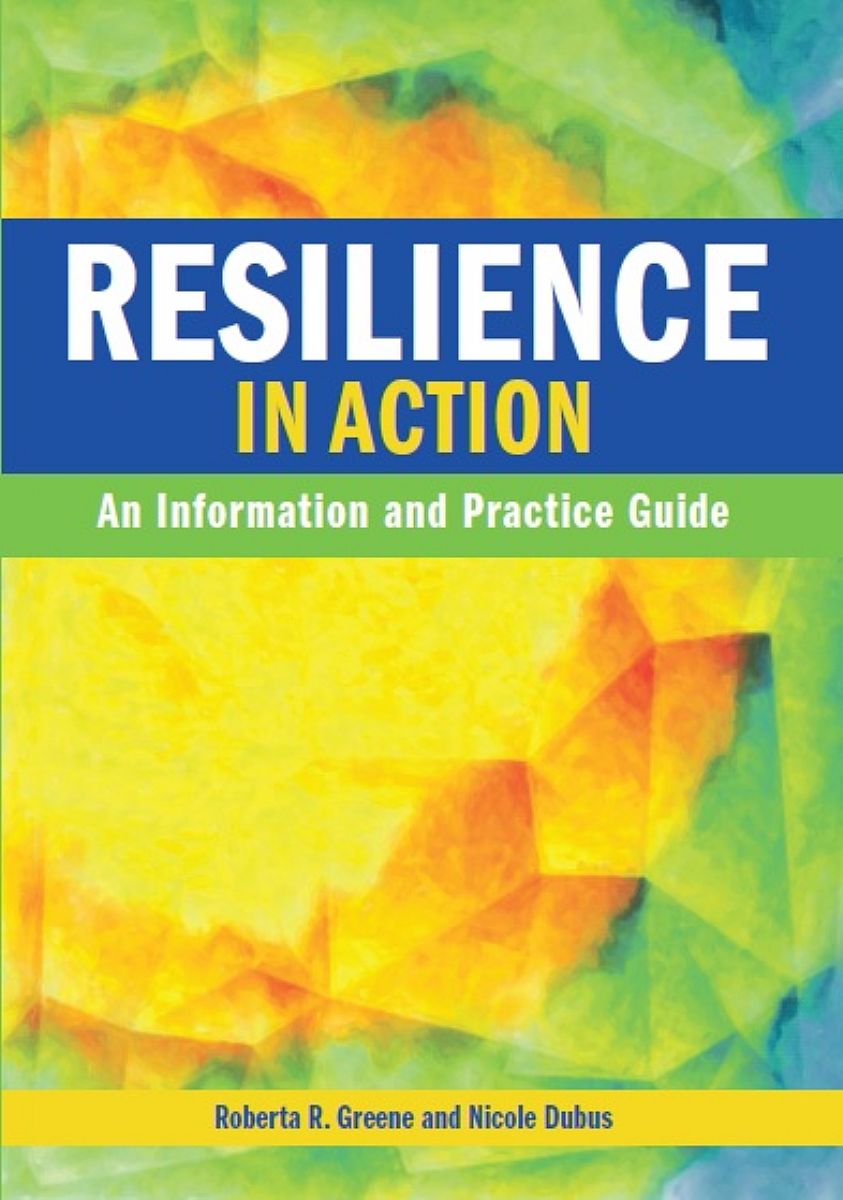
Resilience in Action
An Information and Practice Guide
Authors: Roberta R. Greene and Nicole Dubus
Page Count: 168
ISBN: 978-0-87101-515-0
Published: 2017
Item Number: 5150
Price range: $37.04 through $38.99
NASW members receive 10% discount on books and eBooks by entering their membership number at checkout.
Can your device download this eBook? Click here before purchasing! eBooks are available in single quantities only.
Helping professionals are called to aid individuals and communities in times of tragedy or disaster. Effective intervention and treatment often hinge on augmenting the natural resilience of those affected by adverse situations. But what is resilience How can practitioners recognize, foster, and celebrate resilience in the people that they serve.
Resilience in Action: An Information and Practice Guide examines the methods, practices, and protocols of the resilience ecological stress model (RESM). A metatheory grounded in ecological systems, RESM can be used to help individuals, families, and communities regain the ability to function after calamitous events. In this book, Roberta R. Greene and Nicole Dubus demonstrate how to apply RESM’s framework with a variety of different service users, including those battling a chronic disease, navigating workplace violence, or coping with the aftereffects of an earthquake. The book also discusses how to take a resilient approach to work with refugees, adolescent students, military families, individuals belonging to minority groups, people with disabilities, and the elderly.
Real-life case studies throughout the text further illustrate the components and implementation of RESM. These examples involve individuals who have assisted with or experienced the Oklahoma City bombing, Hurricane Katrina, and other disasters. With its practical tips and situation-specific toolboxes, this book is a must-read for practitioners on the frontlines of adversity.
About the Authors
Preface
Chapter 1: Resilience Ecological Stress Model: Putting Resilience in Action
Chapter 2: Resilience Ecological Stress Model and Social Work Practice: Practice Strategies after Critical Events
Chapter 3: Resilience Ecological Stress Model: Fostering Individual Resilience in Combating a Chronic Disease
Chapter 4: Resilience Ecological Stress Model: Military Family Resilience – Reconnecting after War
Chapter 5: Resilience Ecological Stress Model: Group Practice with Survivors of a California Earthquake
Chapter 6: Resilience Ecological Stress Model: Resisting Political Violence at the Workplace
Chapter 7: Educational Resilience: A Preventive Resilience Ecological Stress Model Approach
Chapter 8: Resilience Ecological Stress Model: Preparing for a Resilient Approach to Refugee Resettlement
Chapter 9: Resilience Ecological Stress Model and Special Populations during an Adverse Event
References
Index
Resilience in Action was reviewed by Elise H. Reed for the journal Social Work.
Roberta R. Greene, PhD, LCSW, professor and chair in Gerontology and Social Welfare at the School of Social Work, University of Texas at Austin, and Nicole Dubus, PhD, LCSW, assistant professor in social work at San Jose State University, California, have developed a practical guide to direct service providers through the complex roles of helping survivors affected by long-term adverse conditions reclaim their lives in Resilience in Action: An Information and Practice Guide. This case study–driven guide addresses natural disasters; chronic disease; family readjustment, including refugee resettlement; and political violence. In line with the ethical responsibilities of social work practice, this book highlights work with vulnerable and marginalized populations in addressing ongoing conditions of adversity. The book indicates that critical events addressed in the text are often a chain in an ongoing series of events for the referenced group. Attention is given to the issue of prevention as it relates to the need for specialized skills when working with children and older adults.
Read the full review. Available to subscribers of Social Work.
This book is intended to serve as a guide for service providers helping survivors of an adverse critical event. Toolboxes throughout the book provide examples of statements to listen for and behaviors to observe that may illustrate ways in which the provider can make a resilience response to people under stress. The goal is to build on survivors’ naturally occurring resilience strategies.
At the time of this writing, the largest mass murder in the modern-day United States occurred in Orlando, Florida, on June 12, 2016, when a lone shooter killed 49 people and wounded 53, further bringing home the relevance of and need for resilience-enhancing work after adverse critical events. The survivors’ reactions to the horrors of this event remind us of people’s natural resilience. News accounts were replete with stories of individuals attempting to protect and bring each other to safety. People told stories of remembrance, and the community set up safe havens and shelters; provided water, food, and basic supplies; and delivered messages of support. Vigils were held, memorials established, and creative acts such as choral performances were attended. Targeted populations, sexual minorities, and the Latino community, offered support to each other and interacted with Muslim neighbors.
As you read through the text, themes are summarized that express love, grief, loss, healing, care, compassion, fear, community, loyalty, tragedy, acceptance, hope, determination, purpose, connection, relationships, bravery, self-sacrifice, endings, transformation.