
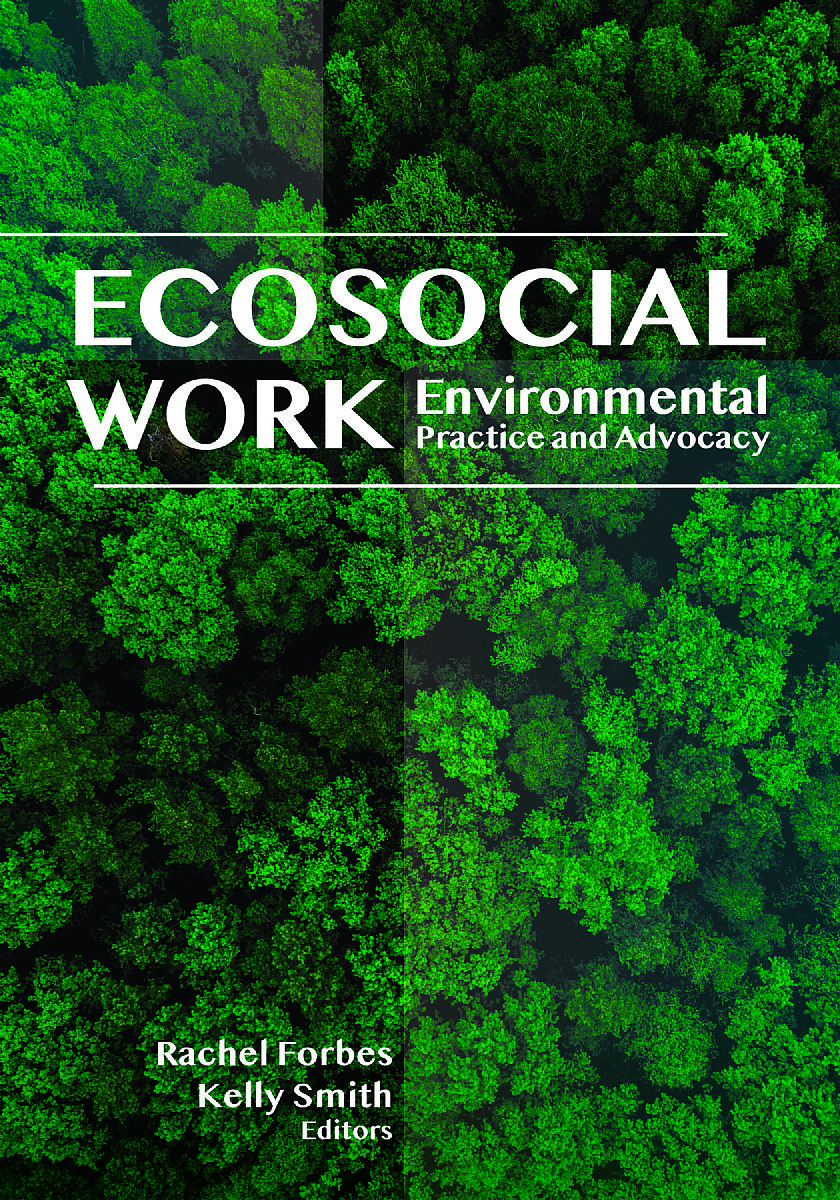
Ecosocial Work
Environmental Practice and Advocacy
Editors: Rachel Forbes and Kelly Smith
Page Count: 296
ISBN: 978-0-87101-590-7
Published: 2023
Item Number: 5907
Price range: $39.26 through $43.62
NASW members receive 10% discount on books and eBooks by entering their membership number at checkout.
Can your device download this eBook? Click here before purchasing! eBooks are available in single quantities only.
Earn 6.5 CEUs for reading this title! For more information, visit the Social Work Online CE Institute.
Ecosocial Work is the recipient of a 2025 Society for Social Work and Research (SSWR) Book Award Honorable Mention, recognizing the editors’ “outstanding scholarly contributions that advance social work knowledge.”
Since the earliest days of social work practice, social workers have dealt with environmental issues, advocating alongside diverse populations to address disproportionate environmental impacts on systemically marginalized populations including those living in poverty, populations of color, persons with disabilities, and women. In the face of the accelerating climate crisis, social workers must proactively engage with clients and communities and respond to the growing impacts of environmental injustices.
The American Academy of Social Work and Welfare’s grand challenge to “create social responses to a changing environment” is a call to action for social workers to advocate for environmental justice. The Global Agenda, developed by the International Federation of Social Workers, the International Association of Schools of Social Work, and the International Council on Social Welfare, calls for multilevel responses to concerns such as forced migration, air pollution, ecoanxiety, and food and water insecurity.
Ecosocial Work: Environmental Practice and Advocacy answers that call with chapters that include theoretical frameworks and innovative tools. In this comprehensive text, the authors take a justice-centered approach as they draw on case examples to elevate multicultural and intergenerational perspectives spanning from local to global contexts. The book encourages readers to consider how simultaneously protecting the planet while meeting the historical aims of the profession advances the values and ethical mandates social workers abide by. Designed to foster critical thinking, the book offers hope and possibility for a just environmental future.
Foreword
Meredith C. F. Powers
Introduction: Foundations of Ecosocial Work Practice
Rachel Forbes and Kelly Smith
Chapter 1: The Climate Crisis and Social Justice: An Overview for Social Workers
Karen Magruder and Stephen Edward McMillin
Chapter 2: Achieving Environmental Justice through Integrated Social Work Practice
Bronwyn Cross-Denny, Christina B. Gunther, Maura M. Rhodes, and Rui Liu
Chapter 3: Social Work Perspectives on Environmental Racism
Natalie Moore-Bembry, Christine Morales, and Mariann Bischoff
Chapter 4: Reparations as a Model for Ecosocial Work Practice
Kimberly S. Compton
Chapter 5: African Americans and Exposure to Environmental Toxins: A Solutions-Focused Approach
Jodi K. Hall and Bernadette C. Vereen
Chapter 6: The Air We Breathe: Carbon and Other Pollutants
Ande Nesmith
Chapter 7: Grassroots Blueprint: How Housing Is Constructed in Ecosocial Work
Tiffany Adamson, Carrie Jankowski, and Rachel McBride
Chapter 8: Social Work Application Model for Environmental Justice
Mariann Bischoff and Christine Morales
Chapter 9: Socially Engaged Art and Environmental Justice: Social Worker as Artivist
Meri Stiles
Chapter 10: Feminist Participatory Action Research: A Methodology for Ecosocial Justice
Naomi Joy Godden, Trimita Chakma, and Kavita Naidu
Chapter 11: Critical Ecofeminism Praxis: The Effects of Water Carrying and Climate Change Adaptation on Nepali Women’s Reproductive Health
Bonita B. Sharma and Dorlisa J. Minnick
Chapter 12: Impacts of Climate Change and Environmental Degradation on Mental Health
Claire Luce, Bailey Fullwiler, and Leah Prussia
Chapter 13: Juxtaposition of Disability and Ecosocial Work: Implications and Challenges
Aarti Jagannathan, Adil Hakkim, and Patricia Welch Saleeby
Chapter 14: Lived Perspectives on the Changing Natural Environment: Voices of Older Detroiters
Evan Villeneuve, Tam E. Perry, Ventra Asana, Fatima Hazimeh, and Brenda Faye Butler
Chapter 15: Ecosocial Work Policy and Advocacy Practice
Georgianna Lynn Dolan-Reilly and Patricia Welch Saleeby
Chapter 16: Forced to Flee Home: An Innovative, Community-Based, and Salutogenic Model to Address the Consequences of Displacement for Refugees
Amy E. Stein
Chapter 17: Interdisciplinary Collaboration to Engage Students in Community-Based Learning and Environmental Justice: A Case Study in an Urban Setting
Eydie Dyke-Shypulski and Amy Dykstra
Chapter 18: Teaching Place for Social Work Practice
Cindy Sousa, Susan P. Kemp, and Bree Akesson
Afterword
Anne C. Deepak, Evelyn P. Tomaszewski, Sebastian Cordoba, and Shenae Osborn
Acknowledgments
Rachel Forbes and Kelly Smith
Index
About the Editors
About the Contributors
Rachel Forbes, MSW, is an associate professor of the practice of social work and the Western Colorado MSW program director at the University of Denver Graduate School of Social Work. She is an appointed member of the Council on Social Work Education (CSWE) Commission on Educational Policy, the inaugural cochair of the CSWE Committee on Environmental Justice, and a former member of CSWE’s Council on Global, Learning and Practice. Rachel was the taskforce cochair for the CSWE Curricular Guide for Environmental Justice (2020) and is coauthor of the book The Intersection of Environmental Justice, Climate Change, Community and the Ecology of Life (2021). Rachel is an elected member of the Colorado Chapter of the National Association of Social Workers Board of Directors. She has taught coursework on sustainability, ecological justice, culture and place-based equity, and fostering sustainable behavior across undergraduate and graduate programs for over 10 years. Rachel’s current research and teaching looks at the impacts of climate change on mental health and ecological justice social work practice. Her work has been published in Environmental Justice and has been funded by the CSWE Katherine A. Kendall Institute for International Social Work. Rachel lives in Glenwood Springs, Colorado where she advocates for environmental justice in mountain communities across Colorado’s Western Slope.
Kelly Smith, DSW, is the founder and director of the Institute for Social Work and Ecological Justice, developing programs that build social workers’ capacity to confront environmental and social justice challenges related to climate change. Kelly teaches for Columbia School of Social Work and Adelphi University School of Social Work and is a member of the Grand Challenge for Creating Social Responses to a Changing Environment Advisory Council. Her research explores the inclusion of environmental and ecological justice content in social work curricula in relation to the disparate impacts of climate change and environmental degradation on communities with concentrated systemic disadvantages. Kelly employs a multisolving approach to climate and social justice issues. Her work in continuing education bridges gaps across social work practice and supports innovations that address pervasive inequities and systems of oppression. Kelly earned her doctorate in social work from the University of Southern California, where she was honored with The Order of Arete. She also holds a master’s degree in Gender and Social Policy from the London School of Economics. Kelly lives with her family on Long Island, serving on her community’s Environmental Advisory Board.
Tiffany Adamson, MSW, LCSW, is the director of field education and clinical assistant professor for the Anne and Henry Zarrow School of Social Work at the University of Oklahoma. She has devoted much of her professional career to preparing social work students as they enter into the profession. Her clinical work has primarily focused on adult mental health and wellness, which led to a continued interest in the impacts of housing and environmental issues on well-being.
Bree Akesson, PhD, is the Canada Research chair (tier II) in Global Adversity and Well-Being and an associate professor of social work at Wilfrid Laurier University. Her program of research ranges from micro-level understandings of the experiences of war-affected families to macro-level initiatives to strengthen global social service systems.
Ventra Asana, DMin, is an ecotheologian and urban environmentalist who advocates for restoring nature spaces as the site of divine Earth care. Ordained as both a deacon in the United Methodist Church and an elder in the African Methodist Episcopal Churches, Ventra, now retired, created and led numerous community outreach programs in ecological ministries over 20 years in Michigan and Illinois.
Mariann Bischoff, MS, MSW, LCSW, is an assistant professor and field education coordinator at Rutgers University. Along with her spiritual practice of interbeing in the tradition of Thich Nhat Hanh, Mariann knows the Earth as a healing being and applies to social work the formal analytical disciplines from her previous careers in engineering and international agriculture.
Brenda Faye Butler, aka Coal Miner’s Daughter, a Chandler Park resident in Detroit, Michigan, has dedicated her life to improving the lives of Birminghamians (in Alabama), Detroiters, and New Yorkers on her journey as a community advocate, addressing inequalities in America through the lenses of labor, health, governmental politics, environmental justice (climate change), and more.
Trimita Chakma is a feminist activist/researcher from the Chakma Indigenous community in Bangladesh. She has worked with hundreds of grassroots activists from the Global South, training them to use feminist participatory action research (FPAR) for social justice. She is a cofounder of the online feminist pedagogical platform FPAR Academy.
Kimberly S. Compton, PhD, MSW, is a practitioner, researcher, and educator, blurring professional lines between her practice experiences working with refugees and urban farms, her research investigating environmental justice advocacy using a critical race lens, and her role as a professor of social work, incorporating environmental social work in curriculum and community.
Sebastian Cordoba, BSW (Hons), PhD, is a social worker, policy advocate, researcher, and academic at RMIT University Australia with a passion for social and environmental justice. He is a United Nations Asia Pacific Representative for the International Federation of Social Workers and a policy advisor on climate change for the Australian Association of Social Workers.
Bronwyn Cross-Denny, PhD, LCSW, is an associate professor and author of Integrated Social Work Practice: Bridging Micro, Mezzo, and Macro Level Practice (Cognella). She has extensive clinical expertise with youth and families of diverse backgrounds, and her scholarship covers diversity, social justice, social determinants of health, and global health.
Anne C. Deepak, PhD, is an associate professor at Monmouth University School of Social Work. She has served as an International Federation of Social Workers representative to the United Nations. Her scholarship and teaching include focuses on postcolonial feminist social work, climate justice, global and community practice, and antiracism.
Georgianna Lynn Dolan-Reilly, LMSW, brings history as a researcher, editor, writer, social media coordinator, adjunct professor, and community development specialist to their environmental justice work. Their focus is on policy, community work, and health promotion and disease prevention. Georgianna is working toward a social welfare PhD from Sacred Heart University.
Eydie Dyke-Shypulski, DMin, MSW, LICSW, is the chair of the Department of Social Work and MSW program director at Bethel University in St. Paul, Minnesota. Eydie and her husband, Michael, enjoy skiing, dogsledding, and paddling in the Boundary Waters of northern Minnesota.
Amy B. Dykstra, PhD, is a professor and chair of the Department of Biological Sciences at Bethel University. She teaches introductory-level biology courses as well as an upper-level plant taxonomy and ecology course. She studies the ecology and evolution of Echinacea angustifolia, a plant native to the tall-grass prairies of North America.
Bailey Fullwiler, MSSW, LSW, is a community social worker and independent ecological grief consultant. As a consultant, she works with environmental groups to navigate ecoanxiety, ecological grief, and burnout through strategic planning, collective care initiatives, and education. In addition, Bailey is a trauma- responsive 200 registered yoga teacher who teaches yoga for resilience in halfway houses throughout Ohio.
Naomi Joy Godden, PhD, BA, BSW, is a vice-chancellor’s research fellow at the Centre for People, Place, and Planet at Edith Cowan University in Bunbury, Australia. She is an ecosocial worker, feminist climate justice activist, and feminist participatory action researcher.
Christina B. Gunther, EdD, is an assistant professor and chair of the Department of Health Sciences at Sacred Heart University. Christina’s focus is on global health with expertise in bias and racism in healthcare, social determinants of health, social justice in community healthcare access and outcomes, and health equity.
Adil Hakkim, PhD, is a PhD research scholar with the Department of Psychiatric Social Work and a psychiatric social worker with the Psychiatric Rehabilitation Services at the National Institute of Mental Health and Neurosciences, Bengaluru, India. His areas of interest include nature and mental health, sustainable living, yoga and spirituality, and psychosocial rehabilitation of persons with mental illness and neurodevelopmental disorders.
Jodi K. Hall, EdD, MSW, is an associate professor of social work and a health disparities researcher. Her focus is interdisciplinary research that is translational to marginalized communities and groups. Her overarching goal is to conduct in-depth examinations of multifaceted health concerns by addressing the impact of the social environment.
Fatima Hazimeh is a graduate student at Wayne State University pursuing a career in pharmacy. She has a great interest in research and improving overall community health. She currently gives back to her community by being a part of many service events such as free medical clinics, winter hygiene drives, park clean-ups, and creating care packages for refugees.
Aarti Jagannathan, MA, MPhil, PhD, is an additional professor of psychiatric social work (Psychiatric Rehabilitation Services), and a mental health professional at National Institute of Mental Health and Neurosciences, Bengaluru, India. Her areas of interest include psychosocial rehabilitation of persons with mental disability through interventions such as supported education, supported employment, supported housing, facilitation of social welfare benefits, dance therapy, nature-based interventions, and yoga.
Carrie Jankowski, MSSW, LCSW, is a clinical assistant professor and field education coordinator for the University of Oklahoma Anne and Henry Zarrow School of Social Work. She has worked with BASW and MSW students since 2014. Carrie’s social work clinical practice focused on healthcare and outpatient counseling, including individuals with special needs, children and families, and older adults.
Susan P. Kemp, PhD, MA, is professor of social work at the University of Auckland, New Zealand, and professor emerita at the University of Washington. Her research and teaching interests focus centrally on place, environment, and community in social work practice. She is also colead of the Grand Challenge for Social Work, Create Social Responses to a Changing Environment.
Rui Liu, PhD, MPH, is an assistant professor of health sciences at Sacred Heart University. Her diverse research portfolio and research interests include aging, physical activity, environmental exposures, nutrition, global health, and mixed-methods research. Her teaching and curriculum development experience spans epidemiology, biostatistics, research methods, and geriatric wellness.
Claire Luce, PhD, MSW, is a researcher whose independent scholarship focuses on the grief and loss experienced as a result of climate change. She has a PhD in social work from Virginia Commonwealth University, an MSW from the University of Illinois Urbana–Champaign, and a BA in environmental studies from Franklin University Switzerland.
Karen Magruder, LCSW-S, is an assistant professor of practice at the University of Texas at Arlington where she created an Environmental Justice & Green Social Work course. She holds a certificate in climate change and health from Yale University and is a member of the Climate Reality Leadership Corps.
Rachel McBride, MSW, LCSW, is a field education coordinator at the Anne and Henry Zarrow School of Social Work at the University of Oklahoma. She has a BS in psychology from the University of Tulsa and an MSW from the University of Missouri. Rachel is a licensed clinical social worker, with most of her clinical experience in child and adolescent mental health.
Stephen Edward McMillin, PhD, studies innovation and entrepreneurship to mitigate the health impacts of climate change and air pollution in support of integral ecology, a holistic approach to environment, society, politics, and economics. His primary approach is social innovation, investigating how harnessing technology, education, design, and evidence-based practice promotes health and well-being.
Dorlisa J. Minnick, PhD, MSW, is a social work scholar activist and an affiliate scholar with the Center for Land Use and Sustainability, which promotes the advancement to create social responses to a changing environment, one of the Grand Challenges for Social Work, by utilizing critical frameworks and community cultural knowledge.
Natalie Moore-Bembry, EdD, MA, MSW, LCSW, earned her MSW at Monmouth University and doctorate of education at Rowan University. She is an experienced educator and trainer and currently serves as director of student affairs at the School of Social Work, Rutgers University. Her research interests include cultural humility and self-awareness, racism and oppression, environmental justice, and community organizing.
Christine Morales, MSW, LCSW, earned an MSW from the University of Southern California. She is currently a doctoral student at Rutgers University School of Education and an assistant professor at Rutgers, where she teaches social work students. Born and raised near an incinerator and sacrifice zones, Christine promotes environmental justice.
Kavita Naidu is an international human rights lawyer and activist from Fiji specializing in feminist climate justice for grassroots women in all their diversity in Asia and the Pacific. Kavita is engaged in regional and international spaces amplifying feminist climate demands, decolonial and feminist global Green New Deal, and feminist participatory action research.
Ande Nesmith, PhD, LISW, is School of Social Work director and professor at the University of St. Thomas. She researches environmental justice in social work practice and education, developing tools to promote an ecocentric perspective that prioritizes all life. She serves on the Council on Social Work Education’s Committee for Environmental Justice and Commission on Global Social Work Education.
Shenae Osborn is an International Federation of Social Workers representative to the United Nations, a coauthor and coeditor of multiple international works, as well as a psychotherapist in New York City. As an international award winner for her research and work on psychological abuse, Shenae strives to create awareness of unseen abuses and help her clients empower themselves through realizing their strengths.
Tam E. Perry, PhD, is an associate professor at Wayne State University School of Social Work. Her research addresses urban aging from a life course perspective, focusing on how underserved older adults navigate their social and built environments in times of instability and change. She is codirector of the National Institutes of Health–funded Community Liaison and Recruitment Core of the Michigan Center for African American Aging Research.
Meredith C. F. Powers, PhD, MSW, is an associate professor in the Department of Social Work at the University of North Carolina at Greensboro. Her applied scholarship includes climate justice, climate migration, ecosocial worldviews, and ecotherapy. She is the founding director of the Climate Justice Program of the International Federation of Social Workers and of the Green/EcoSocial Work Collaborative Network.
Leah Prussia, DSW, LICSW, is a self-described tree-hugging dirt-worshipper. They focus on fostering mind/body and personal/planetary relationships. Leah blends teachings from Anishinaabe elders, nature, somatic experiencing, and relational-cultural theory in their clinical work addressing natural connections. Leah is an associate professor at the College of St. Scholastica.
Maura Rhodes, LCSW, MSW, MS, is clinical assistant professor in the School of Social Work at Sacred Heart University. She was the founding director of the Field Office during the MSW program development. She has extensive practice experience working with adults who are homeless and leadership expertise in program development, quality improvement, and accreditation.
Patricia Welch Saleeby, PhD, MSSA, is the social work program director at Bradley University. Her scholarship focuses on the use of the capability approach and the international classification of functioning, disability, and health system in disability policy and practice. She serves on the Council on Social Work Education board, and she was a member of the Environmental Justice Competency Task Force.
Bonita B. Sharma, PhD, MSSW, is an assistant professor in the Department of Social Work at the University of Texas at San Antonio, College for Health, Community, and Policy. Her research uses feminist perspectives to understand place-based socioeconomic and environmental as well as climate change–related issues impacting women’s health, empowerment, and well-being in the global context.
Cindy Sousa, PhD, MSW, MPH, is an associate professor of social work at Bryn Mawr College. Informed by postcolonial, feminist, and critical race theories, her work examines the health implications of violence, particularly for mothers; protective effects of culture, place, and social support; and professional responsibility in the face of collective suffering.
Amy E. Stein, PhD, MSW, LCSW, has a PhD in social work and social research from Bryn Mawr College, an MSW from Rutgers University, and a BA in psychology from the College of New Jersey. She is a full-time lecturer at the University of Pennsylvania in the School of Social Policy & Practice.
Meri Stiles, PhD, MSW, is associate professor of social work and artivist/curator for the Social Justice Art Gallery at Daemen University. Her research focuses on secondhand harms of substance use among college students. Meri is a working artist making art reflecting on nature, interdependence, and social justice.
Evelyn P. Tomaszewski, MSW, is an assistant professor and MSW program director at George Mason University. As a public health social worker, she has research interests that include HIV/AIDS syndemics, global human rights policy practice, and training the social services workforce. She is an International Federation of Social Workers, United Nations commissioner and chair, Global Alliance Mental Health Task Force.
Bernadette Vereen, BA, LCSWA, was raised in Durham, North Carolina. She received her BA in psychology from Elon University and MSW from North Carolina State University. Bernadette is a trained doula and active birth worker. She currently works as the perinatal social worker for Duke University’s Psychiatry and Behavioral Health Department.
Evan Villeneuve, MSW, is a social work practitioner of 11 years specializing in housing advocacy, community organizing, social services, and public policy. He holds an MSW from the University of Michigan and currently serves his community as a program manager at CLEARCorps Detroit, a community-based nonprofit focused on healthy homes initiatives
Earn 6.5 CEUs for reading this title! For more information, visit the Social Work Online CE Institute.
Ecosocial Work Practice is a must-read book. It argues passionately that social workers are significant players in the ecosocial domain. This message draws on the insights of those working from the deep ecology movement and green social work paradigm, with 18 stimulating chapters that cover materials ranging from mental health issues to working with refugees, all from an ecosocial perspective. This book also highlights the importance of social justice, human rights, and antioppressive values in responding to the diverse experiences of those who are survivors of various environmental disasters. It is clearly written and flowing, so social work students and busy practitioners should be able to follow it without difficulty. It should be on the reading list of every social work curriculum.
Lena Dominelli
Professor and chair of social work
Director of Programme on Disaster Interventions and Humanitarian Aid
University of Stirling, Scotland, United Kingdom
—————————–
Ecosocial Work: Environmental Practice and Advocacy is a pioneering book in social work literature that all social workers will want to read. This book is innovative in that it successfully combines our profession’s beginning and continuing focus on social justice with the broader perspective of environmental justice. In the beginning days of social work when we first worked in settlement houses, we became very aware of the negative effects of economic poverty and thus became advocates for social justice. Over the years we expanded our concerns to fight for BIPOC, LGBTQ, and gender justice. While our mantra has always been person in environment, we first only thought about the environment as a client’s family and community. Now we have expanded our understanding of the environment to include the larger world. And, as always, we have become aware of those who are most disadvantaged in the expanded environment and strive to promote justice for them. Using an ecosocial lens, this book very ably explores social work’s promotion of environmental justice with diverse client groups in different fields of practice.
Elaine Congress, DSW, MA, MSSW, LCSW
Associate dean and professor
Graduate School of Social Service
Fordham University
New York City
—————————–
Chapter 3 defines the concept of environmental racism, by deconstructing and examining the multiple tenets that encompass our understanding of this urgent social work issue in the 21st century. The authors guide the readers in a review of three major components that describe how environmental racism develops: institutionalized environmental racism, personally mediated environmental racism, and internalized environmental racism. The inclusion of specific social work interventions to address environmental racism constitutes a remarkable contribution to be incorporated at the macro, mezzo, and micro levels of practice. The authors discuss several recommendations for social workers to engage in personal and social action to enact antiracist environmental protection.
Chapter 16 examines the conceptualizations and existing research on salutogenic and place attachment models and their use by social workers intervening with refugees and migrants. These models respond to the need to attend mental health distress and lived experiences of trauma by Burmese and other ethnic refugees. Amy E. Stein provides relevant information on global forced migration and the precarious living circumstances of those fleeing home and becoming geopolitically displaced. This chapter introduces the reader to the uprooted–rerooted–planted model as a novel combination of existing models of community gardens and natural setting interventions. This intervention model
is supported by empowerment and cultural competency social work strategies to help refugees experiencing traumatic stress, exacerbated by feelings of being out of place and not belonging to their new resettlement. The incorporation of salutogenesis practices in community settings such as community gardens has been extremely successful in reducing traumatic stress and promoting posttraumatic growth in refugees’ enclaves.
Yolanda Machado-Escudero, PhD, MSW
Assistant professor
Department of Sociology, Anthropology, & Social Work
University of North Florida
Jacksonville, FL
—————————–
Ecosocial Work: Environmental Practice and Advocacy is engaging, informative, and comprehensive, linking environmental and social justice with climate change. Forbes and Smith elicited chapters that are timely, inclusive, and well organized. The authors highlight and delve into complex intersecting issues while identifying oppression along with hope. Chapters engage in critical analysis of risk cutting across poverty, geography, and intersections of diversity, bringing to light the many lessons we can learn from Indigenous cultures and Black and Brown communities. Each chapter provides roadways to change through the use of models and case studies emphasizing the multiple, intersecting dimensions of environmental and climate degradation while providing us with possibilities for change. It is a read that flows with each chapter expanding our vision so that we see the multidimensionality of what we are facing through voices from the local to the global inclusive of advocacy, community,
and place.
Cathryne L. Schmitz, PhD, MSW
Professor emerita
University of North Carolina Greensboro
Greensboro, NC
—————————–
Documented by Puku’i, the Hawaiian ‘Ōlelo No’eau reads: He ali‘i ka ‘āina, he kauwā ke kanaka [The land is a chief, humans are her servant]. As a Native Hawaiian in social work, I am acutely aware that despite the increasingly tangible consequences of climate change, those most impacted by deviations in the environment – namely Indigenous peoples and other communities of color – still routinely face invisibility within discourses on the symbiosis between the environment and one’s health. The essays within Ecosocial Work: Environmental Practice and Advocacy lay essential groundwork that invites us to envision a world that cherishes the environment as a fundamental factor in antiracist, effective, indigenized, and collective wellness. Through exquisite writing and expert research, the reader is invited to partake in the drawing of an essential celestial map for the future of ecosocial work. In sum, Ecosocial Work: Environmental Practice and Advocacy offers a beautifully salient synopsis of how the health and well-being of underserved communities relies closely on the practice of environmentally conscious social work.
Michael S. Spencer, PhD
Ballmer endowed dean
School of Social Work
University of Washington
Seattle, WA
—————————–
Ecosocial Work: Environmental Practice and Advocacy is a timely contribution to the field of social work. Given the environmental extremes we are experiencing, social work is primed to be on the frontlines of environmental work. This text provides valuable guidance as to how we can navigate these challenges with a justice lens and use tangible solutions.
Regardt (Reggie) J. Ferreira, PhD
Director, associate professor
Disaster Resilience Leadership Academy
School of Social Work
Tulane University
New Orleans, LA
Ecosocial Work Practice: Environmental Practice and Advocacy was reviewed by Rhonda Peterson Dealey for the journal Social Work.
While not new to the social work profession, environmental justice is rarely viewed as a primary function of the field. However, the roots of social work are steeped in awareness of the role that built and natural environments have on individual development and well-being. Mary Richmond theorized about the role of environment on the social functioning of individuals in her development of social case work methods, suggesting the importance of neighborhood settings and structural systems in understanding the circumstance of individuals and families (Agnew, 2004). Jane Addams and other Hull-House activists raised concerns, advocated for, and effected social changes in legislation and enforcement to improve the sanitation conditions and environmental hazards impacting low-income and immigrant populations in Chicago (National Park Service, 2021). Despite such foundational efforts, the social work field has drifted toward a social conceptualization of person-in-environment ecology and been mostly reluctant to engage issues of natural and built environments in assessment and advocacy (Coates & Gray, 2012). Ecosocial Work: Environmental Practice and Advocacy offers a call to recenter environmental justice in the work of the social work profession in an accessible, provocative, and practicable manner.
This multiauthored text contains 18 standalone chapters that blend history, literature review, research, case studies, and practical suggestions for ecosocial work. Each brief chapter (12–16 pages in length) provides an element of education, lived experience, and inspiration, with micro, mezzo, and macro-level strategies woven throughout. Global, local, and personal case studies and examples are provided, and personal action and community mobilization are equally represented.
Read the full review. Available to subscribers of Social Work.
—————————–
Ecosocial Work Practice: Environmental Practice and Advocacy was also reviewed by Valerie L. Stevens, Aviva Vincent, and Nikki Pearl for the journal Social Work and Mental Health.
Edited by dedicated ecosocial workers Rachel Forbes and Kelly Smith, Ecosocial Work: Environmental Practice and Advocacy is a collection of thought-provoking chapters that delve into the urgent issues arising from the climate crisis, urging social workers to proactively engage with clients and communities to address the growing impacts of environmental injustices. Moreover, the text encourages interdisciplinary faculty to take an active role to bring ecojustice into the classroom, and provides the argument, curriculum, and case studies to do so effectively and judiciously.
The book begins with a compelling overview of the climate crisis and its impact on social justice, providing a strong foundation for subsequent chapters. The diverse collection of essays encompasses a range of critical topics, including achieving environmental justice through integrated social work practice, perspectives on environmental racism, reparations as a model for ecosocial work practice, and the impacts of climate change on mental health. The book’s comprehensive nature makes it a valuable resource for social workers at all levels of practice, though there is a particular use for academics and faculty within social work and aligned fields. Several chapters situate the next steps for fighting the climate crisis and achieving environmental justice on the shoulders of academics and practitioners; those responsible for educating the next generation of professionals to enter the workforce. Supporting this call to action, the editors encourage readers to consider how protecting the planet aligns with the historical aims of the social work profession.
One of the chief strengths of the collection is that it is applicable and accessible to not just social workers, including those who are new to ecosocial work, but also to a wide interdisciplinary audience. Especially notable are the authors’ clear definitions of crucial terminology throughout the book and their articulation of the stakes of the language used. Ecosocial Work: Environmental Practice and Advocacy stands as an innovative and comprehensive exploration of the intersection between social work and ecological justice, which are uniquely different from climate justice and environmental justice. While environmental justice often demonstrates a human-centric or anthropocentric framework (Chapter 8), ecological justice builds on environmental justice by expanding the focus from working for justice that is primarily only for people to working for justice for people, other species, and the entire ecosystem (Forward, p. xii). By initiating readers into this shared vocabulary, the text allows for a starting place to create change for people and the environment.
The editors set the tone by emphasizing the foundational role of social workers in advocating for environmental justice, and the book consistently gives concrete strategies for intervention on behalf of social workers and the communities that they serve. Nearly every chapter pulls on the theoretical framework of person-in-environment to explain how social work is central to this interdisciplinary work. Similarly, the Code of Ethics is brought into conversation with explicit alignment to call social workers into action. The Biopsychosocial Framework is also discussed in Chapter 8, though it could be elucidated.
Read the full review. Available to subscribers of Social Work in Mental Health.
To hear an interview with the book’s editors, Rachel Forbes and Kelly Smith, listen to the podcast or watch the interview below!
I imagine many of you are eager to read all the wonderful expertise and wisdom found in this book on ecosocial work practice, and some may feel desperate to find hope, solace, and tangible ways to move to action. I commend you, but also urge you: “Don’t just do something, sit there!” Obviously, this is explicitly the opposite of what we feel with the dire sense of urgency and are often prodded, “Don’t just sit there, do something!” I say this to slow us down, in our overly fast-paced world, to invite you into intentional time to authentically experience this book. In this way you are taking a moment to “lean back” rather than “lean in,” to pause, to read, to reflect, to let things simmer, to digest, to unlearn, to disrupt, and to relearn. Some of you will find the content of this book new, while others may have been doing ecosocial work for decades. Some may have already embraced ecosocial worldviews, rather than the prevalent human-centric worldviews that wreak havoc on our world. I believe that all of us have something we can find in this collection of wisdom that will be novel, encouraging, and inspiring. I am thankful for these coeditors and authors, some of whom I am honored to call friends and others whom I am excited to know better. They have poured more than their time and energy into this resource; they have bravely shared what they have experienced, their perspectives, and their expertise on ecosocial work practice in great breadth and depth. In the chapters that follow, you will learn about their experiences with environmental justice, environmental racism, challenges faced by Native American and Indigenous peoples, housing disparities, reparations, art and activism, feminist participatory action research, disaster response, environmental refugees, community gardens, and teaching ecosocial work—and more.
Some of us still wrestle with impostor syndrome—feelings of inadequacy or like we have so little to offer to impact these complex, wicked problems we face in the world, both personally and professionally. But, all of us are actually experts on our own lives, with our own unique experiences, and in our own particular places in the world. When we share our stories, we can move forward together. With that in mind, I invite you to learn from these authors, and then keep the conversation going. Share this with friends, family, colleagues . . . anyone! Find your sphere of influence and start there. Especially consider how you can make local impacts in your current location in the world.
Again, I encourage you to reach out to others to discuss the topics and ideas presented in this book, and connect with the authors, coeditors, and me for further discussion and action planning. Look in ecosocial work practice’s global networks, such as the global Green/Ecosocial Work Collaborative Network, the International Federation of Social Workers Climate Justice Program, and within your local communities to find those who can encourage you, help sustain your spirit, and carry you when you feel like giving up. Prioritize time to rest, refuel, restore, and practice radical self-care and community care as you continue to work alongside one another. Foster the relationships you have with others, including your kinship with nonhuman beings. Find things that work for you to sustain your spirit, to help you get unstuck, and to reinvigorate you. For me, I find that ecotherapeutic practices that foster my connections with nature refuel me when I am feeling low from ecogrief, climate anxiety, and general despair at the state of the world or my own personal issues.
For example, even when I can’t get outdoors, I enjoy nature through my indoor plants, many of which were given to me by friends, colleagues, and students. Some are on the window sill near a photo of the world, taken at night, showing the parts of the world that are lit up with electricity, and those without such access and/or privilege. Near these items, I also placed my Groot figurine, which appears to be guarding them all. This tree-like character, Groot, is from the movie Guardians of the Galaxy. Throughout the movie he says only, “I am Groot,” except for in one scene. In this scene (spoiler alert), the team of guardians are all crashing down in a blazing spaceship to what seems like their certain death. However, as they fall, Groot grows his limbs/branches so quickly and prolifically that he encases his friends and saves them all from the crash. As this is happening one of his friends asks him, “Why are you doing this?” to which he responds, “We are Groot.”
The lesson we can learn from Groot is that as we see climate injustices and other calamities around the world that seemingly grow by the minute, we can hold on to the hope that “We are Groot.” Social workers serve, in a way, as guardians of the planet (maybe not the galaxy), and we can continue to grow together and create opportunities for resilience, regeneration, and hope within ourselves, in our communities, and with our clients. This also reminds me of a favorite quote by Malcom X: “When ‘I’ is replaced with ‘we,’ even illness becomes wellness.”
I encourage you to share this book—and your ideas in response to it—with others far and wide. Finally, take time to celebrate the great work being done by social workers and community partners all over the globe, and inspire others to join with us for climate justice through ecosocial work practice.
Meredith C. F. Powers
Introduction: Foundations of Ecosocial Work Practice
Right here, right now is where we draw the line. The world is waking up.
And change is coming whether you like it or not.
—Greta Thunberg, climate activist
Social workers have always intervened where environmental issues are present. From the earliest days of social work practice, the quality and health of the built and natural environments have remained key priorities for the clients and communities whom social workers serve. While the nature of the environmental issues and subsequent practice interventions have evolved over the years in both their form and variety, the commitment to maintaining healthy and safe environments for vulnerable and oppressed populations has remained the same. While social workers in the early days fought for clean sanitation systems and safe and secure housing, today’s social workers are keen to practice alongside frontline advocates for climate justice and clean energy access. The profession and practice of social work have historically demonstrated malleability, by evolving in concert with the nature and complexity of social issues and injustices. Adapting to practice needs within the natural environment is no exception (Council on Social Work Education [CSWE], 2020).
Historical Roots of Ecosocial Work Practice
Social workers in today’s society cannot continue to advocate for social and economic justice without properly attending to environmental justice. Same was true for social work pioneers. As professionals and educators, social workers are well versed in economic, political, and social justice; social workers understand and have the skill sets to confront all forms of injustice head-on. Yet, the underlying contexts of environmental injustice have not been attended to in mainstream social work, despite its disparate and expanding impact on communities marginalized by gender, race, ethnicity, and/or income (CSWE Committee on Environmental Justice, 2017).
The communities most affected by environmental hazards and injustices are often the same communities where social workers are established in service of individuals and communities (Teixeira & Krings, 2015). A notable example of the history of social workers engaging where environmental injustice is present is the story of Hull-House, the first settlement house in the United States. Settlement houses were institutions that social justice workers created to offer social services to low-income and immigrant communities. Some of the first recognized social workers, namely Jane Addams and Mary Richmond, acknowledged the importance of the built and natural environments to the health and well-being of their clients and client systems. Mary Richmond also realized the role that the environment plays in the social functioning of human beings (Pardeck, 1988). As such, one of the earliest ecosocial work practice interventions were settlement houses that addressed lack of sanitation for low-income and immigrant communities (National Park Service, 2021). It seems that indeed social workers have been poised to address environmental hazards from the first days of our professional practice.
From this history, social work organizations continue to make strides toward climate stability and ecological justice. National Association of Social Workers (NASW, 2020) asserts social workers’ vested interest in the viability of the environment in protecting the well-being and survival of all people and in encouraging human beings to exercise their capacity for intelligent and responsible stewardship of Earth by claiming that “humans are but one element of a vast complicated and interdependent ecosystem. Humans are not separate from, nor superior to, other elements of the biosphere” (p. 12).
Additionally, the International Association of Schools of Social Work (IASSW), International Council on Social Welfare (ICSW), and International Federation of Social Workers’ (IFSW) Global Agenda for Social Work and Social Development (Global Agenda; 2018) has made a clear commitment toward environmental sustainability. In 2015, the American Academy of Social Work and Social Welfare adopted 12 grand challenges to be addressed by the profession; one was to “Create social responses to a changing environment.” (Note: In 2020, a 13th grand challenge was added: “Eliminate racism.”) This grand challenge aims to catalyze social responses that strengthen individual and community capacities for anticipating and adapting to environmental changes while reducing the high exposure to environmental risks for vulnerable groups and equalizing access to needed resources. Finally, the Global Agenda theme of “working toward community and environmental sustainability” includes chapters with short lessons accompanied by exercises to help apply the lessons (IASSW et al., 2018; Powers & Rinkel, 2018; Rinkel & Powers, 2017). The Global Agenda is a key part of the strategy and organizational activity of the three primary global social work organizations: IFSW, IASSW, and the ICSW. The Global Agenda is the product of these three organizations working together to achieve a common vision for how social work is to be developed and implemented locally, nationally, and internationally with an intentional focus on responding to global environmental concerns as they relate to forced migration, climate change, ecological destruction, and food and water insecurity.
A Justice Approach to Ecosocial Work Practice
Social work historically utilizes the person-in-environment framework to understand problems, despite a general acceptance of the correlation between natural and physical environments and health and well-being (Teixeira & Krings, 2015). And while social work has proven historically reluctant to engage in environmental issues due to this narrow social interpretation of the personin- environment methodology, a call to environmental justice exists in social work foundational principles (Coates & Gray, 2012). Highlighting these calls to action can support social workers embracing environmentalism as a foundational principle to the discipline. According to the U.S. Environmental Protection Agency (EPA; 2020), “Environmental justice (EJ) is the fair treatment and meaningful involvement of all people regardless of race, color, national origin, or income with respect to the development, implementation and enforcement of environmental laws, regulations and policies” (para. 1).
According to CSWE (2015), environmental justice occurs when all people equally experience high levels of environmental protection and no group or community is excluded from the environmental policy decision-making process or is affected by a disproportionate impact from environmental hazards. Environmental issues are critical to social work education and practice due to the profession’s unique focus on the person-in-environment perspective. At the heart of the concerns are the impacts of climate change and environmental degradation that dramatically affect quality of life on Earth as well as the social, political, cultural, and economic systems on which human communities depend. Vulnerable populations, including those living in poverty, populations of color, and women, bear a disproportionate share of the consequences, leading to what is now understood as environmental injustice (CSWE Committee on Environmental Justice, 2017).
Many social work scholars would regard ecological justice as synonymous with climate justice. They are very similar, but with some small distinctions. Environmental justice may be considered a type of ecological justice. Ecological justice builds on environmental justice by expanding the focus from working for justice that is primarily only for people to working for justice for people, other species, and entire ecosystems. The concept of ecological justice is innovative and also inclusive of Indigenous* knowledge and practices about the intricate interconnections among people and all living and nonliving things. According to IFSW, the climate crisis is directly connected to human activities and is not merely due to normal patterns of nature. While the climate crisis impacts all of us, those who are marginalized or oppressed are experiencing it to an even greater extent, creating climate injustice for people and the planet. Much of the burden of unsustainable consumption patterns has fallen disproportionately on the most vulnerable people in the world, who typically have the smallest consumption patterns. In addition, these vulnerable people receive fewer of the benefits of the environmental resources. These collective patterns of unsustainable consumption contribute to the climate crisis, making it a global justice issue for people and the planet (IFSW, 2021).
Climate Injustice
Decades of social work research has consistently demonstrated that in the United States racial minorities, especially those living in poverty, face substantially more environmental hazards in daily life than wealthier, White individuals (Beltrán et al., 2016). Even though the toxic burden of pollution falls disproportionately on the impoverished and minority populations that social work endeavors to serve, historically the profession has not intervened in a meaningful way to alleviate this pervasive problem. The economic and social costs of climate disasters expose a widening gap between those with and those without communities of color are more likely than wealthier neighborhoods to be situated in areas prone to flooding without adequate drainage systems, as exemplified by Hurricanes Katrina and Harvey (Stone & Cohen, 2017). Furthermore, research by Pearson et al. (2018) debunked the pervasive assumption that only wealthy White individuals care about the state of the environment. Through a nationally representative survey experiment the research group demonstrated that diverse populations underestimate the environmental concerns of low-income American minorities, misperceiving them as caring less about these issues than more affluent White Americans (Pearson et al., 2018). The implications for this misperception are vast, as those most vulnerable to environmental hazards are also perceived as the least concerned about the environment. Debunking these myths may support efforts to better incorporate the input of these communities in inclusive and diverse environmental decision making.
As a note, we recognize this volume is influenced by the time in which it was created and published. With the ongoing evolution of language, we acknowledge that some best practices in inclusive language may change over time, and will be cognizant of these changes when updating future editions with new terms and concepts. Please know throughout the volume our intention is to be most respectful, especially with communities that are not our own.
Conclusion
Climate change gravely threatens the human–Earth system, requiring intersectional and interprofessional responses to address the resulting injustices. Social work has indeed begun to heed the call to do its part not only in preventing climate change, ecological injustice, and environmental degradation from the root causes, but also in addressing the downstream impacts on vulnerable and oppressed populations. Over the last two decades, attempts to incorporate environmental justice within social work, including measures by NASW, CSWE, and AASWSW, have recognized the importance of embracing environmental concerns as a discipline. Social work must utilize its deep and historical skill set and ethical commitments to shape policy and offer substantial solutions to the most resonating and complex challenge of modern time. The impacts of climate change on the health and well-being of vulnerable populations have important social work practice implications (Appleby et al., 2017).
Social work’s historical focus on building social justice and community-oriented approaches can support proactive responses to climate change (Coates & Gray, 2012; Dominelli, 2012). With a focus on positive outcomes for individuals and communities, social work can extend its expertise and collaborate with other disciplines to find best practices to resolve and mitigate the devastating effects of climate change. As the limits of the Earth’s ecosystems and atmosphere are continuously pushed to extremes, social work can organize a collective response across disciplinary levels to advance cooperation and activate socially just solutions.
References
Appleby, K., Bell, K., & Boetto, H. (2017). Climate change adaptation: Community action, disadvantaged groups and practice implications for social work. Australian Social Work, 70, 78–91. https://doi.org/10.1080/0312407X.2015.1088558
Beltrán, R., Hacker, A., & Begun, S. (2016). Environmental justice is a social justice issue: Incorporating environmental justice into social work practice curricula. Journal of Social Work Education, 52, 493–502. https://doi.org/10.1080/10437797.2016.1215277
Coates, J., & Gray, M. (2012). The environment and social work: An overview and introduction. International Journal of Social Welfare, 21, 230–238. https://doi.org/10.1111/j.1468-2397.2011.00851.x
Council on Social Work Education. (2015). 2015 educational policy and accreditation standards for baccalaureate and master’s social work programs. https://www.cswe.org/getattachment/Accreditation/Standards-and-Policies/2015-EPAS/2015EPASandGlossary.pdf
Council on Social Work Education. (2020). Curricular guide for environmentaljustice. https://www.cswe.org/education-resources/2015-epas-curricularguides/2015-environmental-justice-guide-web-version/
Council on Social Work Education Committee on Environmental Justice. (2017). CSWE Environmental Justice Committee [Unpublished white paper]. Author.
Dominelli, L. (2012). Green social work: From environmental crises to environmental justice. Polity Press.
International Association of Schools of Social Work, International Council on Social Welfare, & International Federation of Social Workers. (2018). Global agenda for social work and social development: Third report. Promoting community and environmental sustainability. International Federation of Social Workers. https://www.iassw-aiets.org/wp-content/uploads/2018/07/ Global-Agenda-3rd-Report-PDF.pdf
International Federation of Social Workers. (2021, July 5). Climate Justice Program. https://www.ifsw.org/social-work-action/climate-justice-program/
National Association of Social Workers. (2000). Social work speaks: NASW policy statements 2000–2003 (5th ed.). NASW Press.
National Park Service. (2021, January 6). Hull-House and the ‘garbage ladies’ of Chicago. https://www.nps.gov/articles/000/hull-house-and-the-garbageladies-of-chicago.htm
Nesmith, A., & Smyth, N. (2015). Environmental justice and social work education: Social workers’ professional perspectives. Social Work Education, 34, 484–501. https://doi.org/10.1080/02615479.2015.1063600
Nguyen, C., Horne, R., Fien, J., & Cheong, F. (2017). Assessment of social vulnerability to climate change at the local scale: Development and application of a Social Vulnerability Index. Climatic Change, 143, 355–370. https://doi.org/10.1007/s10584-017-2012-2
Pardeck, J. T. (1988). An ecological approach for social work practice. Journal of Sociology & Social Welfare, 15, Article 11. https://scholarworks.wmich.edu/jssw/vol15/iss2/11
Pearson, A., Schuldt, J., Romero-Canyas, R., Ballew, M., & Larson-Konar, D. (2018). Diverse segments of the US public underestimate the environmental concerns of minority and low-income Americans. Proceedings of the National Academy of Sciences, 115, 12429–12434. https://doi.org/10.1073/pnas.1804698115
Powers, M. C. F., & Rinkel, M. (Eds.). (2018). Social work promoting community and environmental sustainability: A workbook for social work practitioners and educators (Vol. 2). International Federation of Social Workers.
Rinkel, M., & Powers, M. C. F. (Eds.). (2017). Social work promoting community and environmental sustainability: A workbook for global social workers and educators. International Federation of Social Workers.
Stone, M., & Cohen, S. (2017). The influence of an extended Atlantic hurricane season on inland flooding potential in the southeastern United States. Natural Hazards and Earth System Sciences, 17, 439–447. https://doi.org/10.5194/nhess-17-439-2017
Teixeira, S., & Krings, A. (2015). Sustainable social work: An environmental justice framework for social work education. Social Work Education, 34, 513–527. https://doi.org/10.1080/02615479.2015.1063601
U.S. Environmental Protection Agency. (2020). Learn about environmental justice. https://www.epa.gov/environmentaljustice/learn-about-environmentaljustice
U.S. Environmental Protection Agency. (2021, May 18). Climate change indicators. https://www.epa.gov/climate-indicators
Van Lange, P., Joireman, J., & Milinski, M. (2018). Climate change: What psychology can offer in terms of insights and solutions. Current Directions in Psychological Science, 27, 269–274. https://doi.org/10.1177/0963721417753945
*With a multitude of voices and identities in these chapters, this text uses NASW Press style and capitalizes Indigenous, Black, and White (but not terms like “whiteness” or when referring to “white supremacy”).