
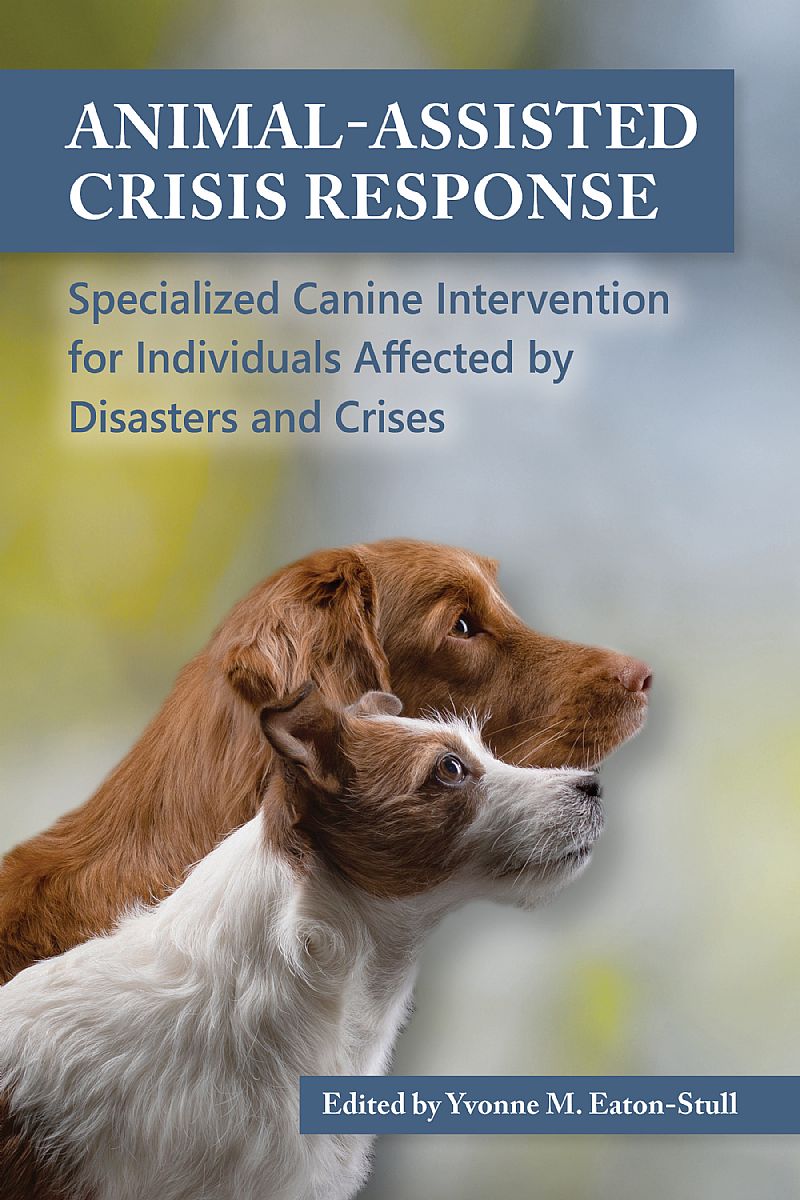
Animal-Assisted Crisis Response
Specialized Canine Intervention for Individuals Affected by Disasters and Crises
Editor: Edited by Yvonne M. Eaton-Stull
Page Count: 208
ISBN: 978-0-87101-554-9
Published: 2020
Item Number: 5549
Price range: $35.10 through $38.99
NASW members receive 10% discount on books and eBooks by entering their membership number at checkout.
Can your device download this eBook? Click here before purchasing! eBooks are available in single quantities only.
Earn 5.0 CEUs for reading this title! For more information, visit the Social Work Online CE Institute.
Animals can be valuable allies in the aftermath of a natural disaster or human-made crisis. There is growing research that the presence of specially trained canines can help survivors and first responders recover both physically and mentally from traumatic events. Touching or being in the presence of a dog can lower heart rate, blood pressure, and cortisol levels; relieve anxiety; lessen isolation; amplify feelings of support and comfort; bolster motivation and morale; and improve expression and regulation of emotions. When survivors are alone, displaced, or separated from loved ones, dogs can connect them to helping professionals and networks of support.
Animal-assisted crisis response (AACR) is a unique and proven intervention following crises and disasters. AACR teams are specially skilled, trained, and evaluated handlers with therapy dogs deployed after myriad incidents, including natural disasters, school or other mass shootings, terrorist attacks, and suicides, and also in nonemergency programs such as grief camps for children and memorial services for community traumas.
Through detailed case studies written by certified crisis dog handlers, this book demonstrates how each AACR presents its own unique challenges and opportunities. The authors discuss the intersection of psychological first aid (PFA) and AACR, offering canine-based techniques that can be incorporated into PFA and all trauma-informed care.
Deployment best practices are discussed in detail from pre-deployment preparation, active deployment scenarios, and post-deployment evaluation, self-care, and stress management for both humans and canines. Crucially, this book recommends building effective partnerships with local, state, and national organizations and governments.
On television and in our private sessions, we are bombarded with news of crises and disasters that affect both survivors and responders. For social workers on the frontlines who would like to expand their crisis response skill set, this book provides foundational knowledge of AACR and the skills and traits of effective handlers and team leaders. For those already using AACR, this book is a necessary resource to ensure practitioner competence and to inform best practices.
Acknowledgments
Part 1: Context for Animal-Assisted Crisis Response
Chapter 1: Introduction to Animal-Assisted Crisis Response
Yvonne M. Eaton-Stull and Brian Flynn
Chapter 2: Crisis Intervention, Psychological First Aid, and Animal-Assisted Crisis Response Application
Mandy Fauble
Chapter 3: Skills and Traits Enhancing Handler Suitability for Animal-Assisted Crisis Response
Kay Scott
Chapter 4: Challenges of Crisis Response Work
Heather White
Chapter 5: Self-Care and Stress Management
Daniel M. Eaton
Chapter 6: Canine Stress in Animal-Assisted Crisis Response Work
Dae Grodin
Chapter 7: Reciprocal Partnerships in Animal-Assisted Crisis Response
Cynthia Wright and Melanie Dunbar
Part 2: Applications of Animal-Assisted Crisis Response
Chapter 8: Natural Disasters Pose Unique Challenges for Animal-Assisted Crisis Response
Deborah Hatherley
Chapter 9: Mass Violence and Animal-Assisted Crisis Response
Yvonne M. Eaton-Stull and Brian Flynn
Chapter 10: Grief and Loss: Animal-Assisted Crisis Response Applications
Yvonne M. Eaton-Stull
Chapter 11: Animal-Assisted Crisis Response across Generations
Yvonne M. Eaton-Stull
Chapter 12: Interventions in the School Setting
Jennifer VonLintel
Chapter 13: Case Studies from Human-Caused Crises
Ned Polan, Sue Herman, and Sheila Consaul
Chapter 14: Case Studies from Natural Disasters
Bette Caldwell, Steve Booth, Bari Boersma, Vicki D’Amico, Sharen Fisher, and Harry Schlitz
Appendix A: Canine Animal-Assisted Crisis Response Readiness Checklist
Yvonne M. Eaton-Stull and Janet Velenovsky
Appendix B: Personal Animal-Assisted Crisis Response Readiness Checklist
Yvonne M. Eaton-Stull and Brian Flynn
Index
About the Editor
About the Contributors
Yvonne M. Eaton-Stull, DSW, LCSW, is an associate professor of social work at Slippery Rock University in Pennsylvania. She teaches courses in animal-assisted intervention and crisis intervention. Eaton-Stull specializes in crisis intervention, forensic social work, and animal-assisted social work and has provided clinical intervention to children and adults for many years. She has provided animal-assisted therapy in various mental health facilities and crises and disasters throughout the United States. Her recent research has included numerous studies implementing animal-assisted interventions in correctional facilities around trauma, grief and loss, stress management, and self-injury.
Bari Boersma, DVM, is an equine veterinarian working with horses in the Inland Empire. She earned her bachelor of arts degree from University of California, Berkeley, and her DVM from University of California, Davis. Bari is also a certified EMT in Riverside County. Her canine partner Star is a nine-year-old Australian shepherd. Bari and Star have been involved in therapy work for six years and currently are members of Pet Partners. In 2016, they passed assessment and training and became certified members of HOPE Animal-Assisted Crisis Response (HOPE AACR). Bari and Star have responded to multiple call outs, including schools, Hurricane Harvey, the Santa Rosa and Ventura fires, and the Montecito mudslides.
Steve Booth is a retired sergeant from the Orange County, California, Sheriff’s Department. He and his dog Henry have been providing animal- assisted crisis response (AACR) since 2016. Steve and Henry are also part of the Orange County Sheriff Peer Support Team as a “trauma” dog team, where they respond to any law enforcement members who have experienced a line-of-duty traumatic incident. As an AACR team, Steve and Henry have responded to over 275 incidents, including student deaths, school shootings, flooding, wildfires, and Hurricane Harvey.
Bette Caldwell, MA, became a team leader for HOPE AACR in the fall of 2015, following her retirement from Los Angeles Unified School District. Her career in education began in 1964 following her graduation from UCLA as an English and education major. She taught English, remedial reading, and journalism at the junior high school level for the next 14 years. During that time, she worked on her master’s degree in school counseling at Loyola–Marymount University. Following a year’s sabbatical leave spent touring the United States, she returned to the school district as an administrator and served as a head counselor, a position she held for the next 36 years, serving at several junior and senior high schools. Her volunteer work, in addition to HOPE AACR, involves church and the Delta Kappa Gamma Society International, an organization of key women educators in 17 countries. Bette currently serves as the California State recording secretary for Delta Kappa Gamma.
Sheila Consaul, MA, is an experienced corporate communications, public relations, media relations, and marketing professional with over 38 years of experience. She has worked for controversial organizations, Fortune 50 clients, nonprofits, and trade associations, including as the primary spokesperson for United Way of America, America’s largest nonprofit, during Hurricane Katrina in 2006. Sheila holds a master’s degree in public communication from American University and a bachelor of arts in international studies from Bradley University. In addition to her career, Sheila spends time volunteering for a variety of interests and causes. Sheila is passionate about animal-assisted interventions, working with several organizations including People Animals Love, Fairfax (VA) Pets on Wheels, HOPE AACR, and the American Red Cross Animal Assisted Therapy program at Walter Reed National Military Medical Center. Sheila also enjoys historic preservation and owns a lighthouse in Northeastern Ohio that she is currently restoring.
Vicki D’Amico, BS, has worked in management and marketing for nonprofit organizations for over 20 years. She started training dogs in 2000, when she became a volunteer puppy raiser training dogs for service and assistance work. Vicki and her golden retriever, Pearl, have been a certified K9 team with HOPE AACR since 2015 and have responded to numerous disasters and crises. They have also been working as a therapy dog team for both local and national organizations since 2012. In addition, Pearl is a certified MRI dog and participates in the Emory University Canine Cognitive Neuroscience research program “The Dog Project.” When not working, Pearl enjoys competing in various sports, including dock diving, barn hunt, and most notably nose work and scent detection.
Melanie Dunbar, PhD, LPC, is director of behavioral health at Lake Erie College of Osteopathic Medicine and has been working in the behavioral health field for over 20 years. As a psychologist and licensed professional counselor, her experience has encompassed community, school, and home-based services, community mental health, and private practice. Areas of professional interest and expertise include mood and anxiety disorders, trauma, grief and loss, personality disorders, and dialectical behavioral therapy. She has been registered with the Alliance of Therapy Dogs since 2008 and is a tester and observer for the organization. She joined HOPE AACR in 2007 with her first canine partner, Gus. She and her current HOPE AACR dog Casimir have been a team since 2015. She is past president of HOPE AACR, served on its board of directors, and is chair of the Mental Health Committee.
Daniel M. Eaton, DNP, RN, is an assistant teaching professor at Penn State Behrend in Erie, Pennsylvania. Daniel is a registered nurse with a specialty focus in mental health nursing and nursing care of the older adult. In addition to his teaching and research role at Penn State, Daniel works clinically as a staff nurse in a crisis residential unit. Daniel volunteers his time as a team leader with HOPE AACR and as a member of the Erie County Critical Incident Stress Management team. Daniel lives in Erie with his wife Tracy, daughter Elliana, son Emerson, and dog Zoe.
Mandy Fauble, PhD, LCSW, is a social worker in northwestern Pennsylvania, where she is director of clinical care services at UPMC Western Behavioral Health at Safe Harbor, where she has been since 2002. Her areas of focus include mental illness, crisis intervention, and trauma. Fauble is an assistant professor at Edinboro University of Pennsylvania and an adjunct at Mercyhurst University. She is certified in online teaching and a trainer for Applied Suicide Intervention Skills Training (ASIST) and Question, Persuade, Refer (QPR) models of suicide prevention. Fauble has served on several boards and committees, including the Pennsylvania State Board of Social Workers, Marriage and Family Therapists and Professional Counselors, and the Rehabilitation and Community Providers Association of Pennsylvania .
Sharen Fisher, MSW, has worked in the mental health field for more than 32 years. Although all her canine family members had impeccable manners, she officially started helping others in 2016 as an instructor at Obedience Club of Chattanooga. She co-owns S & J Canine Coaching and uses her mental health training to help families integrate their canine into their lives. Quinn is a soft-coated wheaten terrier who achieved his Conformation Championship at 20 months and his Grand Championship in 2014. He has achieved the highest titles in Canine Good Citizenship, Tricks, and Therapy Dog. He is the neutral dog, for testing applicants to become members of a national therapy dog organization. Sharen and Quinn joined HOPE AACR in 2015.
Brian Flynn, MSW, LCSW, is a clinical social worker and the director of admissions and student services at the Binghamton University Department of Social Work, where he teaches courses in coping with disaster, crisis and loss, diversity and oppression, and social work practice with individuals, groups, and families. He has clinical experience as a psychotherapist and as an emergency room social worker. Brian has responded to numerous communities providing disaster mental health and crisis response, including Ground Zero following the attack on the Twin Towers in 2001; Phuket, Thailand, after the 2004 Boxing Day tsunami; the Washington, D.C., Navy Yard, shooting in 2013; and the 2009 shooting at the American Civic Association in Binghamton, New York. He is also a team leader with HOPE AACR.
Dae Grodin, BA, is the owner and trainer of Dog-Abilities, a dog training service in the northern Kentucky and Cincinnati, Ohio, areas. She provides a variety of services, including group classes, board and trains, and private in-home training. She specializes in behavior and enjoys trying to solve the puzzle with issues related to fear, anxiety, reactivity, and aggression in her clients. Dae holds a bachelor of arts from the University of Kentucky and is a Certified Professional Dog Trainer, Knowledge Assessed; a graduate of the Karen Pryor Academy; and a FitPaws Master Trainer. She belongs to the Association of Professional Dog Trainers, International Association of Animal Behavior Consultants, and HOPE AACR. Dae has three dogs who all have their own in-depth résumés, including search and rescue, AACR, therapy dog, nose work, barn hunt, lure coursing, and tricks. They also share their home with a bunny named Clover.
Deborah Hatherley, EDS, NCSP, is a special educator, retired after 36 years in Georgia and Virginia schools. She is a certified trainer for the National Association of School Psychologists’ School Safety and Crisis Preparedness Curriculum (PREPaRE), which helps schools prepare for and respond to critical incidents. Deborah served as American Red Cross disaster mental health lead for the Georgia Region for six years. She coordinated the Integrated Care Condolence Team, providing support for families after disaster-related deaths and injuries. For more than 20 years, she has responded to tornadoes, hurricanes, wildfires, floods, and mass casualty events throughout the country. Since 2005, she has served as responder, evaluator, and trainer with HOPE AACR with her canine partners, Brinkley and Tikva.
Sue Herman, PT, is a physical therapist in a hospital setting and at the time of the Charleston, South Carolina, church shooting was a team leader for HOPE AACR. She is on the board of directors for HOPE AACR. She began her AACR work traveling and assisting teams without her own dog, all the time watching and learning what made a good comfort dog and what experiences these dogs had to face. Since then, she has raised two Leonbergers, Lilly and Talon, who are wonderful HOPE AACR dogs. She also has a third Leonberger, Mira, who recently became a therapy dog. Sue has been instrumental in working with schools in Pennsylvania as they revise their crisis plans and include HOPE AACR in their response.
Ned Polan, PhD, retired vice president for global research and development for a major chemical company, is New England coordinator for HOPE AACR. In addition to crisis response, his golden retrievers Brinkley and Meg make 200 visits annually to a hospital mental health facility, a rehabilitation center, a crisis stabilization facility, and a VA soldiers’ home.
Harry Schlitz has been a team leader with HOPE AACR for over 10 years where he has provided leadership on numerous deployments, including the Washington, DC, Navy Yard shooting, hurricane responses, and Seattle high school shootings. Harry is a U.S. Air Force veteran who lives in the beautiful state of Montana with his wife of 29 years, Lela. Together they had a 20-year business called Mountain Mushers Sled Dog Education/Therapy Team, where they provided school and educational programs nationally. They have two sons, two stepdaughters, and eight grandchildren.
Kay Scott, PhD, LCSW-R, CASAC, is a clinical social worker from the Hudson Valley Region of New York. She has worked with therapy dogs for 20 years and with AACR dogs since shortly after September 11. She has been a board member of HOPE AACR and National Animal-Assisted Crisis Response (now National Crisis Response Canines). She has been a therapy dog instructor and evaluator since 1999; her most recent crisis dog, Willow, was a golden retriever. Scott’s dissertation focused on how mental health professionals integrated therapy canines into their work serving those who survived traumatic events.
Janet Velenovsky, MM, has served with HOPE AACR since she certified her first dog, Kaizen, in 2005. Janet is currently regional manager for the Eastern United States. Her second and third HOPE AACR dogs are Border Collies Image and Oscar. Janet has obtained numerous credentials, including Certified Professional Dog Trainer—Knowledge Assessed, Karen Pryor Academy Certified Trainer Partner, and service dog coach, as well as certification with the Fear Free Certified Professional program. She is a graduate of Purdue University’s DOGS course and holds a counseling certificate from the San Francisco SPCA’s Academy for Dog Trainers. Janet was honored with the Animals as Other Nations award at the International Association of Animal Behavior Consultants (IAABC) conference held in Houston in 2009. Janet is a past president of the IAABC and served as chair of its Working Animals division. Janet has obtained the credentials of Certified Dog Behavior Consultant and Associate Certified Cat Behavior Consultant with IAABC.
Jennifer VonLintel, MS, is a licensed school counselor in Loveland, Colorado, specializing in animal-assisted interventions in the school setting. She and her golden retriever, Copper, are members of HOPE AACR and the Thompson School District Psychological Response Team. Jennifer contributes to HOPE AACR as a member of its Mental Health Committee and is a disaster mental health volunteer with the American Red Cross. She is the administrator for an international group of educators who share best practices, research, and tools to support the work of registered therapy dogs in the school setting and the amazing growth of students that they work with. Copper’s work at B. F. Kitchen Elementary School can be accessed by visiting http://www.schooltherapydogs.org.
Heather White, LMSW, holds a master’s degree in Social Work from Hunter College, having won the Jacob Goldfein award for her thesis, “Optimizing Animal-Assisted Interactions within Psychiatric Facilities.” She has completed the Animals and Human Health and Equine Assisted Mental Health certificate programs through the University of Denver’s Institute for Human Animal Connection, the certificate program in Veterinary Social Work through the University of Tennessee’s Graduate School of Social Work, and a certificate in treating animal abuse through Arizona State University. Heather is a certified clinical trauma professional and previously served as director of programs and training as well as an executive trainer for an East Coast–based therapy dog organization for several years and is active in the field of therapy dog work with her own dogs. Heather works professionally in the fields of canine- and equine-assisted interactions.
Cynthia Wright, DEd, is a licensed psychologist in Pennsylvania and a nationally certified school psychologist. She earned her doctorate in educational and school psychology from Indiana University of Pennsylvania. She has worked with a wide variety of populations in her 26 years with the Commonwealth of Pennsylvania. She and her husband live with five Shih Tzus, two of whom are certified therapy dogs through the Alliance of Therapy Dogs. They are part of Paws Hand Delivered, a therapy dog organization. They have provided therapeutic services across a variety of settings, including public schools, state correctional institutions, libraries, skilled nursing facilities, and a hospital transitional care unit.
Earn 5.0 CEUs for reading this title! For more information, visit the Social Work Online CE Institute.