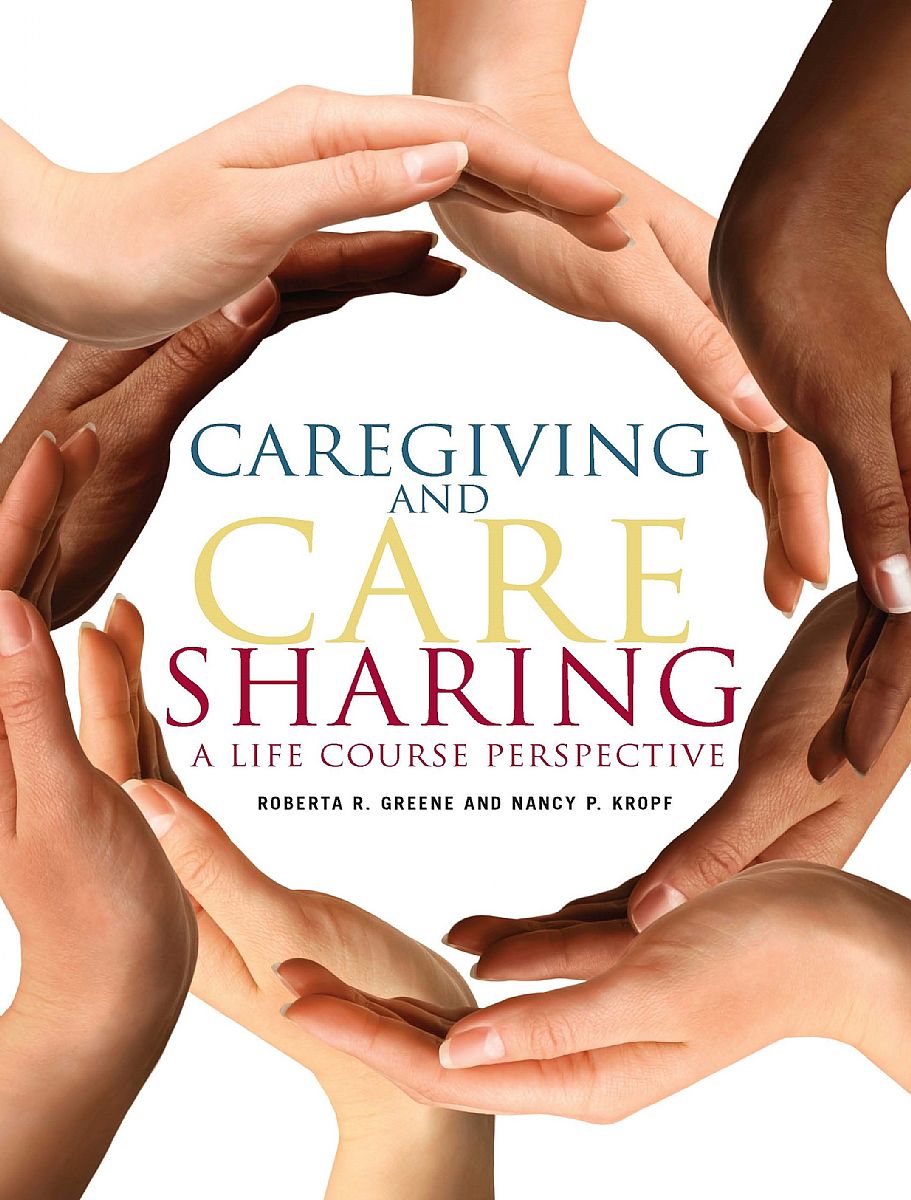
Caregiving and Care Sharing
A Life Course Perspective
Authors: Roberta R. Greene and Nancy P. Kropf
Page Count: 272
ISBN: 978-0-87101-456-6
Published: 2014
Item Number: 4566
eBook$28.72Paperback$28.72
NASW members receive 10% discount on books and eBooks by entering their membership number at checkout.
Can your device download this eBook? Click here before purchasing! eBooks are available in single quantities only.
Caregiving and care sharing take place across the life course and involve various configurations. Although there are similarities, families have different needs and experiences of care depending on the caregiving situation, life course issues, and unique personal history.
In Caregiving and Care Sharing: A Life Course Perspective, the authors highlight the experience of providing care in several different family situations. This book not only serves as a guide to assist those caring for older adults, but also examines the experiences of older caregivers caring for younger adults, as older parents care for adult children with intellectual and psychiatric conditions, or when grandparents are raising their grandchildren. The caregiving needs of veterans are also addressed.
As the number of older adults rises, the diversity of the population will also increase. The concept of care sharing indicates that care provision is not a solitary task. It implies that professionals are part of a caregiving collective – joining with families to promote functioning of those who require care. The chapters in this book identify various experiences of care and provide an opportunity for students and practitioners to develop their own model as professionals who will be part of a caregiving collective.
About the Authors
Preface
Chapter 1: Introduction to Care Provision
Chapter 2: Changing Families
Chapter 3: Theory for Care: Integrating Your Caregiving Model
Chapter 4: Caring for Older Adults: Functional Capacity and Health Status
Chapter 5: Disability through the Life Course
Chapter 6: Care Provision and Severe Mental Illness
Chapter 7: Returning Veterans
Chapter 8: Caregiving Model for People with HIV/AIDS
Chapter 9: Grandparents Raising Grandchildren
Chapter 10: Caregiving with Lesbian, Gay, Bisexual, Transgender, and Questioning Clients
Chapter 11: Immigrant Families: Caregiving Transitions
Chapter 12: Caregiving and Care Sharing: The Social Environment of Family Life
References
Index
Caregiving and Care Sharing: A Life Course Perspective is not just another book on caregiving that identifies challenges and opportunities of caring for a particular population. Rather, it presents a distinctive model of social care as well as the concept of care sharing as a way to capture the intersections of the micro/macro aspects of caregiving within a broader societal context. Linked to core social work competencies, it posits an integrated practice model, which assesses and builds on resilience and is solidly grounded in social work’s primary theoretical perspectives and values. These practice models and theories are applied to rich complex cases that capture a wide range of care sharing situations across the life course, such as caring for someone with mental illness, intellectual disabilities, or posttraumatic stress. Throughout, issues of cultural diversity and cultural competence are skillfully addressed, resulting in a book relevant to generalist and advanced practice courses.
Nancy R. Hooyman, PhD, MSW
Hooyman Endowed Professor in Gerontology
Co-PI, CSWE National Center for Gerontological Social Work Education
University of Washington School of Social Work
Caregiving and Care Sharing was reviewed by Yeonjung Jane Lee for the journal Social Work.
With changes in family structure and diversity among older adults, caregiving has to be considered from a greater societal level. Informal caregivers are unpaid individuals who provide care for family or friends, whereas formal caregivers are paid for their services, often at care facilities (Family Caregiver Alliance [FCA], 2016). Approximately 40 million Americans provide care for older adults age 50 and older, and 60 percent of the caregivers are women (FCA, 2015; Hooyman & Kiyak, 2018; National Alliance for Caregiving & AARP Public Policy Institute, 2015).
Social workers are working with older adults from increasingly diverse families due to the growth in the divorce rate; female employment; multigenerational households; childless families; and lesbian, gay, bisexual, transgender, and queer (LGBTQ) older adults (Hooyman & Kiyak, 2018). Two distinguished social work professors, Roberta R. Greene and Nancy P. Kropf, experts in the field of aging, have written a book proposing a holistic view of caregiving situations with case studies and theories. Greene not only served as professor at the School of Social Work, University of Texas at Austin, but has also worked with victims of the Holocaust and diverse refugees. Kropf, a professor of social work at Georgia State University, has clinical experience working with older adults and families.
Read the full review. Available to subscribers of Social Work.
Recent decades have brought significant changes in family form and function, as well as new service delivery models that promote health and well-being for people with various disabilities within their own homes and communities. Nevertheless, providing care to family members continues to be part of family life across the life course. This text discusses select caregiving situations that illustrate traditional models and emerging social work practice trends. These models may be used in a wider array of caregiving situations than is presented here.
This book was inspired by evolving caregiving theoretical approaches. For example, caregiving has usually been thought of as a family matter, often involving the care recipient and one primary caregiver. This text suggests a different point of view proposed by Daatland, a Swedish scientist who studied the life course and social welfare services for older adults. Daatland (1983) suggested that “caregiving be seen as a form of social organization that includes the interpersonal relationships and the division of practical tasks: a truly collective action, depending upon direct and indirect contributions from a number of actors, including the cared for himself ” (p. 1). That is, all activities of family and friends, state programs, and services should come together to form a coherent whole. Daatland also extended the caregiving concept to include the idea of social care, a network of formal and informal services that support care provision.
The term “social care” takes social workers back to their roots, when we were part of the fabric of the social welfare system, taking action to ensure that people’s basic needs were met. Practitioners worked closely with the client and client system to improve social functioning. This was a collective action—whether formal or informal—encompassing complex social relationships. This broad definition included practice methods as well as policy and programs to improve the wellbeing of people at risk and in need of care.
Still another influence was Stanley’s (2007) work on risk management in New Zealand’s child welfare system. Using a narrative perspective, Stanley described the social worker’s role as facilitating discourse among families, practitioners, and policymakers in order to reach an understanding of the level of risk for children and who is chosen to give care. Care sharing is another concept that gave rise to the approach taken in this book. Care sharing was coined by Covan (1998) to describe a type of care collective, a communal effort that organizes a combination of strategies to maximize pleasure and minimize losses that might otherwise be associated with the aging process.
This book aims to provide a fuller context for caregiving practice situations, “continuously discovering, appraising, and attending to changing locales, populations, scientific and technological developments, and emerging societal trends to provide relevant services” (Council on Social Work Education [CSWE], 2008, p. 6). Because of rapidly emerging caregiving innovations, such as those prompted by the Affordable Care Act, readers are encouraged to seek out new care strategies as they become available.