
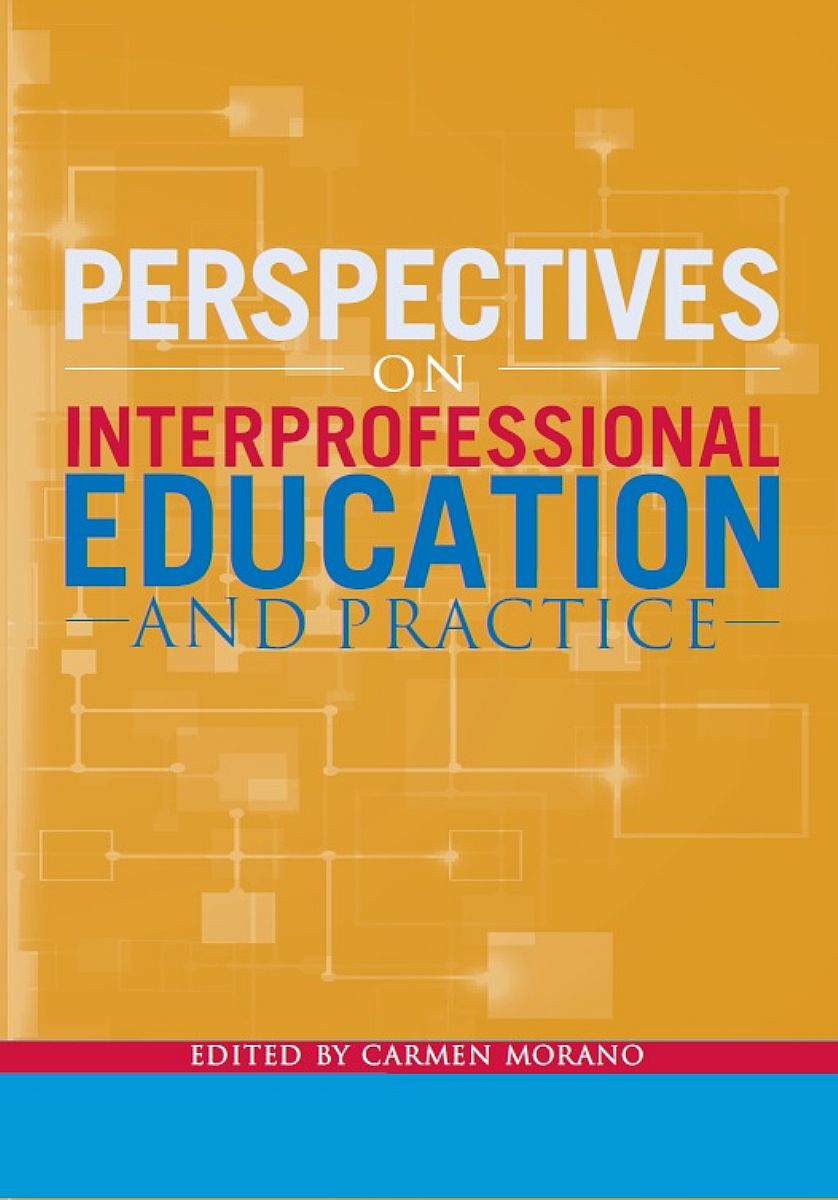
Perspectives on Interprofessional Education and Practice
Editor: Carmen Morano
Page Count: 275
ISBN: 978-0-87101-508-2
Published: 2017
Item Number: 5082
Price range: $39.15 through $43.99
NASW members receive 10% discount on books and eBooks by entering their membership number at checkout.
Can your device download this eBook? Click here before purchasing! eBooks are available in single quantities only.
Helping professionals in health services are increasingly called to provide person-centered, participant-directed care. This requires working as part of an interdisciplinary team to identify interventions that are both medically beneficial and culturally competent. However, with little exposure to other health-related specializations during their education, practitioners might find it difficult to work cooperatively and efficiently to achieve the best outcomes for the people in their care. The need for effective interprofessional education (IPE) and interprofessional practice (IPP) has grown in response to these challenges.
Perspectives on Interprofessional Education and Practice provides a comprehensive look at the history and implementation of IPE and IPP in academic and occupational settings. The book examines the history of IPE, the rise of competency-based education, and the challenge of balancing multiple disciplinary competencies. It then explores the four core competencies for IPP developed by the Interprofessional Education Collaborative. The book presents detailed analyses of five academic programs in the United States that currently offer IPE programs, discussing the methods, curriculum designs, and logistical approaches that made the programs enriching for students. Finally, it delves into the nuances of IPP in a variety of settings and specialty areas, including the Veterans Health Administration, pediatric medicine, geriatric medicine, and the emergency department.
Throughout the book, case studies provide concrete examples of the complex interactions of interdisciplinary teams. In addition, one case example links to a series of interactive, Web-based modules, offering readers further opportunities to apply the principles outlined in the text. Whether you are an educator, practitioner, administrator, or student, Perspectives on Interprofessional Education and Practice is an ideal resource for an ever-shifting health care landscape.
About the Editor
About the Contributors
Introduction
Part 1: Background and History of Interprofessional Education
Chapter 1: Competency-Based Education
Carmen Morano
Chapter 2: The History of Interprofessional Education
Carmen Morano
Part 2: Core Competencies of Interprofessional Education
Chapter 3: Values and Ethics
Kenya V. Beard
Chapter 4: Interprofessional Communication
Kathleen M. Nokes
Chapter 5: Roles and Responsibilities
Teri Kennedy
Chapter 6: Teams and Teamwork
Carmen Morano
Part 3: Interprofessional Education Programs in the United States
Chapter 7: University of Kentucky
James C. Norton
Chapter 8: The University of Maryland at Baltimore
Kelley Macmillan and Deborah Rejent
Chapter 9: Arizona State University
Robin P. Bonifas
Chapter 10: University at Buffalo
Diane E. Elze, Paul T. Wietig, and Patricia J. Ohtake
Chapter 11: Hunter College and Weill Cornell: Public-Private Academic Partnership
Kathleen M. Nokes
Chapter 12: Interprofessional Education: Issues in Evaluation
James C. Norton and James A. Ballard
Part 4: Settings of Interprofessional Practice
Chapter 13: Interprofessional Practice in the Veterans Health Administration
Judith L. Howe and Louisa Daratsos
Chapter 14: Interprofessional Practice in Pediatric Medicine
Kanako Okuda
Chapter 15: Interprofessional Practice in Geriatric Medicine
Thomas V. Caprio
Chapter 16: Interprofessional Practice in the Emergency Department
Martine Sanon and Gallane Dabela Abraham
Conclusion
Appendix A: Core Competencies
Appendix B: Overview of the Web Modules
Index
Carmen Morano, PhD, is a professor at the Silberman School of Social Work and director of Silberman Aging: A Hartford Center of Excellence in Diverse Aging. Morano is a John A. Hartford Faculty Scholar and the former codirector of the Geriatric Social Work Pre-Dissertation Initiative. He is cochair of the Aging Field of Practice and past chair and member of the Health Resources and Services Administration’s Advisory Committee on Interdisciplinary Community-Based Linkages. Morano has done extensive lecturing and training in interprofessional practice and was lead social work faculty on the Interdisciplinary Training and Education course at Cornell-Hunter. His research includes developing competency-based curriculum for gerontological social work and in the area of person-centered, participant-directed services. His most recent research has focused on establishing enduring linkages between medical and social systems of care.
Gallane Dabela Abraham, MD, is an assistant professor of emergency medicine and the associate director of the Geriatric Emergency Department at the Icahn School of Medicine at Mount Sinai in New York City. She also serves as a neurotrauma consultant for the National Football League and NFL Players Association. She received a bachelor of arts degree in political science with a concentration in economics from Barnard College of Columbia University, completed the Health Careers Program at Harvard University, and obtained her medical doctorate from Rutgers/University of Medicine and Dentistry of New Jersey—New Jersey School of Medicine. In addition, she completed a fellowship in health services and health disparities research and received a master’s in clinical research at the Icahn School of Medicine at Mount Sinai. Abraham is board certified in emergency medicine.
James A. Ballard, EdD, has been the associate director of the University of Kentucky (UK) Center for Interprofessional Health Education since its inception in 2010. Until 2015, he served as an educationist in the UK Department of Family and Community Medicine. Prior to 2010, he held positions as the associate director of the UK Area Health Education Center, manager of the Community Faculty Program, and director of the Medical Professions Placement Service. Nationally, he is a past steering committee member of the Generalists in Medical Education, cochair of the National Area Health Education Center Education Committee, and member of the Research in Medical Education Committee within the American Academy of Medical Colleges Southern Group on Educational Affairs.
Kenya V. Beard, EdD, GNP-BC, NP-C, ACNP-BC, CNE, ANEF, is the associate vice president for curriculum and instruction at Jersey College, and a 2012 Josiah Macy Faculty Scholar. She is the founding director of the Center for Multicultural Education and Health Disparities, an educational initiative that seeks to disseminate research and best practices that focus on increasing workforce diversity. She recently served as the director of Hunter College’s Being Excellent Scholars in Transition to Nursing, a program that is federally funded by a workforce diversity grant and seeks to broaden the recruitment, retention, and graduation of underrepresented minority nursing students. She was recently inducted into the Academy of Nursing Education, is a fellow in the New York Academy of Medicine, and serves on the editorial board for the American Journal of Nursing and the New York State Board for Nursing.
Robin P. Bonifas, PhD, is an associate professor at the Arizona State University School of Social Work. She has over 15 years of experience working with elders and their families in both long-term care and inpatient psychiatric settings. Robin is a John A. Hartford Faculty Scholar in Geriatric Social Work and earned her doctorate from the University of Washington in Seattle in 2007. She serves on the board of directors for the Association of Gerontology Education in Social Work and is a consulting editor for Health & Social Work and the Journal of Gerontological Social Work.
Thomas V. Caprio, MD, MPH, MSHPE, CMD, HMDC, FA CP, is an associate professor of medicine, clinical nursing, and public health sciences at the University of Rochester Medical Center in Rochester, New York. He serves as director of the geriatric medicine fellowship program, director of the University of Rochester geriatric assessment clinic, and director of the Finger Lakes Geriatric Education Center. He currently oversees the Finger Lakes Geriatric Workforce Enhancement Program and is past president for the National Association of Geriatric Education Centers and the National Association for Geriatric Education.
Louisa Daratsos, PhD, MSW, is the psychosocial coordinator for oncology/palliative care at the U.S. Department of Veterans Affairs New York Harbor Healthcare System, Brooklyn Campus. A longtime employee of her medical center, Daratsos has worked during the various configurations of treatment teams and has participated formally and informally in training medical professionals, particularly in oncology and palliative care.
Diane E. Elze, PhD, is an associate professor at the University at Buffalo School of Social Work, where she also directs the MSW program. She serves on the editorial boards of the Journal of Youth and Adolescence, Journal of Gay and Lesbian Social Services, Adolescent Research Review, and the Journal of the Society of Social Work and Research. She is a former member of the Council on Social Work Education’s Board of Directors, Commission on Professional Development, Commission on Sexual Orientation and Gender Expression, and Commission for Diversity and Social and Economic Justice. She has been a member of the University at Buffalo’s Interprofessional Education Leadership Team since 2012.
Judith L. Howe, PhD, is professor at the Brookdale Department of Geriatrics and Palliative Medicine, Icahn School of Medicine at Mount Sinai; associate director of education and evaluation and deputy director at the Bronx VA Medical Center Geriatric Research Education and Clinical Center; and director of the Consortium of New York Geriatric Centers. She is also director of the VA Interprofessional Palliative Care Fellowship based at the Bronx VA Medical Center. Howe is the editor-in-chief of Gerontology and Geriatrics Education, has served as an elected member of the Association for Gerontology in Higher Education, was the president of the State Society on Aging of New York, and is past president of the National Association for Geriatric Education Centers. She is a fellow of the New York Academy of Medicine, Association for Gerontology in Higher Education, and the Gerontological Society of America.
Teri Kennedy, PhD, MSW, LCSW, ACSW, FNA P, is director, Office of Gerontological and Interprofessional Initiatives with the School of Social Work, College of Public Service and Community Solutions, Arizona State University (ASU); research associate, University of Arizona Center on Aging; and faculty affiliate, ASU Center for the Advancement of Interprofessional Education, Practice and Research. She is also ASU site director for the Arizona Geriatric Workforce Enhancement Program; and interprofessional coach with the Interprofessional Primary Care Curriculum Implementation and Evaluation Project with the ASU College of Nursing and Health Innovation.
Kelley Macmillan, PhD, is associate director, Community and Social Services, Sanford Center for Aging; and faculty of the University of Nevada, Reno. In his current position at the Sanford Center, he is assisting with the development of a comprehensive geriatric assessment team, teaching in the School of Social Work, and providing administrative support for three managers of community service programs. His academic career includes teaching MSW individual practice courses, policy courses in aging and behavioral health, and the interprofessional course described in chapter 8.
Kathleen M. Nokes, PhD, RN, FAAN , is professor emerita from Hunter College and Graduate Center, City University of New York. She has almost 50 years of experience as a registered nurse and was involved in the first wave of interprofessional education in the late 1970s. When the HIV/AIDS epidemic emerged in the 1980s, it was clear that only committed members of the interprofessional team would be able to control this raging, evolving, mysterious illness that was taking the lives of so many young, talented people. When the second wave of recognition of the need for interprofessional collaboration was tied to patient safety, Nokes welcomed the opportunity to participate on an academic team that included social work, public health, medicine, and nursing. Nokes has had in-depth global work in South Africa and Japan especially through Fulbright awards and now is on the Review Committee for the Fulbright Specialist award.
James C. Norton, PhD, is the director of the University of Kentucky Center for Interprofessional Health Education. He holds a joint appointment as professor in the Departments of Psychiatry and Neurology at the University of Kentucky, is past president of the Kentucky Rural Health Association, and received the Dan Martin Award from that organization in 2014 for his contributions to rural health in Kentucky. He served as the chair of the Research and Education Constituency Group of the National Rural Health Association and was a member of its board of directors. He has served as the AAMC Group on Educational Affairs (GEA) Liaison to the Group on Resident Affairs and was the chair of the Graduate Medical Education section of the GEA.
Patricia J. Ohtake, PhD, PT, is an associate professor in the Department of Rehabilitation Science, School of Public Health and Health Professions, at the University at Buffalo. Ohtake is a physical therapist with experience in acute care and intensive care unit clinical practice, and she teaches the clinical management of patients with cardiopulmonary dysfunction and interprofessional collaborative practice in the entrylevel doctor of physical therapy program. Her research interests are the management of individuals with critical illness, the role of simulation in enhancing learning outcomes for health professions students, and interprofessional education and collaborative practice. Ohtake serves as an editorial board member for Physical Therapy, the American Physical Therapy Association’s official journal. Ohtake has served in leadership roles on the University at Buffalo’s Interprofessional Education Leadership Team and its Simulation Center Steering Committee since 2010.
Kanako Okuda, MSW, BA, is a licensed clinical social worker and a social work educator and is currently the director of field education at the Silberman School of Social Work. Prior to joining Silberman, Okuda specialized in pediatric oncology at a major teaching hospital in New York City, and she has held lectures and workshops addressing multicultural practice in the United States. In her early career, Okuda worked with multistressed families in the child welfare system in New York City, as well as Japanese-speaking children and their families through the New York City Department of Education to address cultural and language barriers. Her work also extends to East Africa, particularly Kenya, working with a community of tea farmers for sustainable economic empowerment.
Deborah Rejent, PhD, MSSW, MA, is an associate professor and founding director of the MSW Program, Department of Social Work, School of Health Sciences, at Quinnipiac University. Her academic career includes teaching at the MSW level, completing extensive postgraduate clinical training in psychotherapy, psychoanalysis, and mindfulness-based interventions, and practice experience in clinical treatment, supervision, and administration in a wide range of programs, such as a hospital outpatient psychiatric unit, a medical adult day program, a residential treatment center for children, and a university counseling center.
Martine Sanon, MD, is an assistant professor in the Brookdale Department of Geriatrics and Palliative Medicine and Department of Medicine, Division of Hospital Medicine, at the Icahn School of Medicine at Mount Sinai. She is a graduate of the SUNY Downstate College of Medicine and completed her residency in internal medicine at the same institution and fellowship in geriatrics at the Mount Sinai School of Medicine. Currently, Sanon serves as the director of the Inpatient Geriatric Medicine Clinical Services and as the geriatric liaison to the Department of Emergency Medicine.
Paul T. Wietig, EdD, is the assistant vice president for interprofessional education within the University at Buffalo’s Academic Health Center. He previously served as the core curriculum coordinator for the School of Public Health and Health Professions and, most recently, was the interim director of the Teaching and Learning Center of the University at Buffalo. Wietig also serves as adjunct professor in the Department of Rehabilitation Services.
Perspectives on Interprofessional Education and Practice was reviewed by Scott Sainato for the journal Social Work.
One of the cornerstones of education is to help prepare students to enter the workforce. As the makeup of the workforce is always changing, educators must also adapt their teaching methodologies to ensure students meet the needs of the current workforce. Perspectives on Interprofessional Education and Practice examines the growing need for interprofessional education (IPE) and practice for students and workers across a multitude of disciplines.
In the introduction, Carmen Morano discusses the book’s purpose and the value of findings, and sets the tone and organization for the rest of the book. Throughout, contributors from different universities and disciplines provide key information on IPE. It is critical as a person reads any book to know the background of the author, editor, and contributors because they each provide a unique and valuable perspective on the book. Carmen Morano is a professor at the Silberman School of Social Work and director of Silberman Aging: A Hartford Center of Excellence in Diverse Aging. Although this book provides insights from many disciplines, the focus on social work is demonstrated throughout. Morano has conducted training and teaching focused on interprofessional practice. This exhibits the competency and background of the editor.
Read the full review. Available to subscribers of Social Work.
A recent Internet search using the term interprofessional education yielded over 600,000 entries; a similar search for interdisciplinary education generated almost 1,000,000 results. Although it can be said that a rose by any other name would smell as sweet, word choice does matter in this context (Choi & Pak, 2008). This text distinguishes interprofessional (from different professions) individuals engaged in practice from interdisciplinary (when speaking about the various disciplines) and multidisciplinary individuals (who draw on different disciplines but remain within the boundaries) (Choi & Pak, 2008). Although the idea of interprofessional teams in health care has existed for more than a century (Freeth, Hammick, Reeves, Koppel, & Barr, 2005), the uptake of interprofessional and interdisciplinary education (IPE) in the United States has been relatively slow, especially when compared with the growth of IPE internationally.
The process of integrating IPE and interprofessional practice (IPP) in the United States has been complicated by the division of the health and social care systems, the growth of medical specialties, and the fragmented systems of health education (Hall & Weaver, 2001; Institute of Medicine [IOM], 2003, 2008; Wagner et al., 2001). There is a clear imperative to better prepare students and the current workforce. Policy initiatives such as the Patient Protection and Affordable Care Act of 2010 (ACA), which calls for better care, better health, and smarter spending, require a systemic integrated approach to removing the financial, structural, and institutional barriers to IPE and IPP. There are signs that some of the structural and historic barriers are slowly coming down. In the past five years, the number of IPE programs has grown. Is it possible, as Freeth and colleagues (2005) suggested, that IPE is here to stay, even in the United States?
Current indications are that IPE is gaining significant momentum, but sustaining the commitment of institutional resources to support IPE will require evidence that it is worth the investment. There is little doubt that IPE has the potential to improve student knowledge, attitudes, values, and skills, but how this translates to achieving the goals of the ACA is not yet fully established. The IOM (2015) concluded that the current evidence is lacking, and developing this evidence is a complex process that will require a purposeful integration of a multitude of systems and a long-term commitment.
The Importance of IPE and IPP
There are a number of factors that influenced the development and organization of this text. During my 20 years of social work practice, the majority of which were spent providing geriatric care management services to older adults and their family systems, I have had the opportunity to participate in countless numbers of interprofessional teams. The collective knowledge and skills of the team translated into significantly better outcomes and, in some cases, unanticipated positive outcomes. One such example is the case of Mr. S.
Case Study: Mr. S
Mr. S was residing in a nursing home, having maxed out his skilled care coverage under Medicare. When admitted to the nursing home, it was thought that he would never be able to return home. When I first met Mr. S, he still had significant left-side weakness that left him with limited movement in his left arm and with no control of his left leg, so that he was unable to stand. At the last case conference, Mr. S and his family were informed by the attending physician at the nursing facility that his care needs were greater than could be reasonably met at home and that they should be planning for his long-term placement in a nursing home.
All Mr. S wanted was to get out of the nursing home and return to his home. Most important, he stated that all he wanted out of life now was to live long enough to attend his daughter’s wedding, which was scheduled to take place in 10 months. After the doctors told him that it was unlikely he would be able to go home, he was ready to, as he put it, “just give up.” Our office was called to provide mental health services to treat Mr. S’s apparent depression.
The interdisciplinary team that began working with Mr. S and his family at the nursing home included a community-based geriatric care manager, a mental health professional, and a physical therapist who was paid privately by the family. The team eventually grew to include an architect for home modification, an aqua therapist (Mrs. S indicated that her husband had been a lifelong swimmer), and a personal companion who was a contemporary that shared similar interests. This team collaborated with the patient and his family to develop a comprehensive interdisciplinary plan. The care manager assumed responsibility for facilitating constant communication about progress and setbacks with all the members of the team.
After nine months of rigorous physical and occupational therapy supplemented with weekly aqua therapy, not only did Mr. S attend the wedding, but he was able to walk his daughter down the aisle. It was experiences like this and others that motivated me to enter academia. Although Mr. S and his family had the resources to pay for services that are not available to everyone,the cost for implementing the plan of care was significantly less than the cost of long-term institutional care and also improved the quality of life for both Mr. S and his family.
Interprofessional Perspectives in Education and Practice was also motivated by my 15 years developing graduate and continuing education curriculum. This text attempts to address a gap in the current body of literature by focusing on successful programs and practices in the United States that administer health and social care in a unique context.
The experiences of participating in interprofessional teams throughout my practice career and then becoming a social work professor, at which time I became a trainer and advocate for IPE and IPP, provided further motivation for this text. It was my social work education and training that gave me the opportunity to develop curriculum designed to train workers from various disciplines to work on interprofessional teams in a timely and practical way. So, too, was the experience of joining an interprofessional team of academics that developed the ITEACH program presented in chapter 11. This experience solidified my resolve to make certain that the social work frameworks of social justice, oppression, and person in environment would be critical contributions that from my perspective were frequently overlooked in other IPE programs. If health care is to become person centered or, as my colleagues say, patient centered, this content must be a foundation on which to build effective interprofessional learning opportunities for students and the workforce.
The role of the social worker on the interprofessional team as a patient advocate is complex and frequently not fully understood. And although I do agree with Freeth and colleagues (2005) that the interprofessional team is a unique type of team, the theoretical foundations and practical knowledge of group dynamics included in most, if not all, social work curricula could be used to expand the social work role that should be recognized as a valuable asset to any interprofessional team.
Orientation to the Text
As an editor and contributor to this text, I had to decide how to best balance the competing demands of a common voice while honoring the perspectives and voice of different professionals. Although I provided some guidance regarding the content of each section and chapter, I did not edit the contributors’ preferred terminology. For example, although “person-centered care” is the preferred vernacular in social work, “patient-centered care” remains the preferred and dominant vernacular in most health care professions.
This book is divided into four sections, each with a different focus. Part 1 establishes a context to better understand the history and development of competence-based education, IPE, and its evaluation. Part 2 provides a review of the four core competencies of interdisciplinary education. Part 3 comprises five chapters from academic programs in the United States. Part 4 provides a perspective on IPP in a variety of different areas. The authors were encouraged to use case illustrations as needed.
References
Choi, B.C.K., & Pak, A.W.P. (2008). Multidisciplinarity, interdisciplinarity, and transdisciplinarity in health research, services, education and policy: 3. Discipline, interdiscipline distance, and selection of discipline. Clinical and Investigative Medicine, 31, E41–E48.
Freeth, D., Hammick, M., Reeves, S., Koppel, I., & Barr, H. (2005). Effective interprofessional education. Oxford, United Kingdom: Wiley-Blackwell.
Hall, P., & Weaver, L. (2001). Interdisciplinary teamwork: A long winding road. Medical Education, 35, 867–875.
Institute of Medicine. (2015). Measuring the impact of interprofessional education on collaborative practice and patient outcomes. Washington, DC: National Academies Press.
Institute of Medicine, Committee on the Future Health Care Workforce for Older Americans. (2008). Retooling for an aging America: Building the health care workforce. Washington, DC: National Academies Press.
Institute of Medicine, Committee on the Health Professions Education Summit. (2003). Health professions education: A bridge to quality. Retrieved from http://iom.edu/Reports/2003/Health-Professions-Education-A-Bridge-toQuality.aspx
Wagner E. H., Austin, B. T., Davis, C., Hindmarsh, M., Schaefer, J., & Bonomi, A. (2001). Improving chronic illness care: Translating evidence into action. Health Affairs, 20, 64–78.