
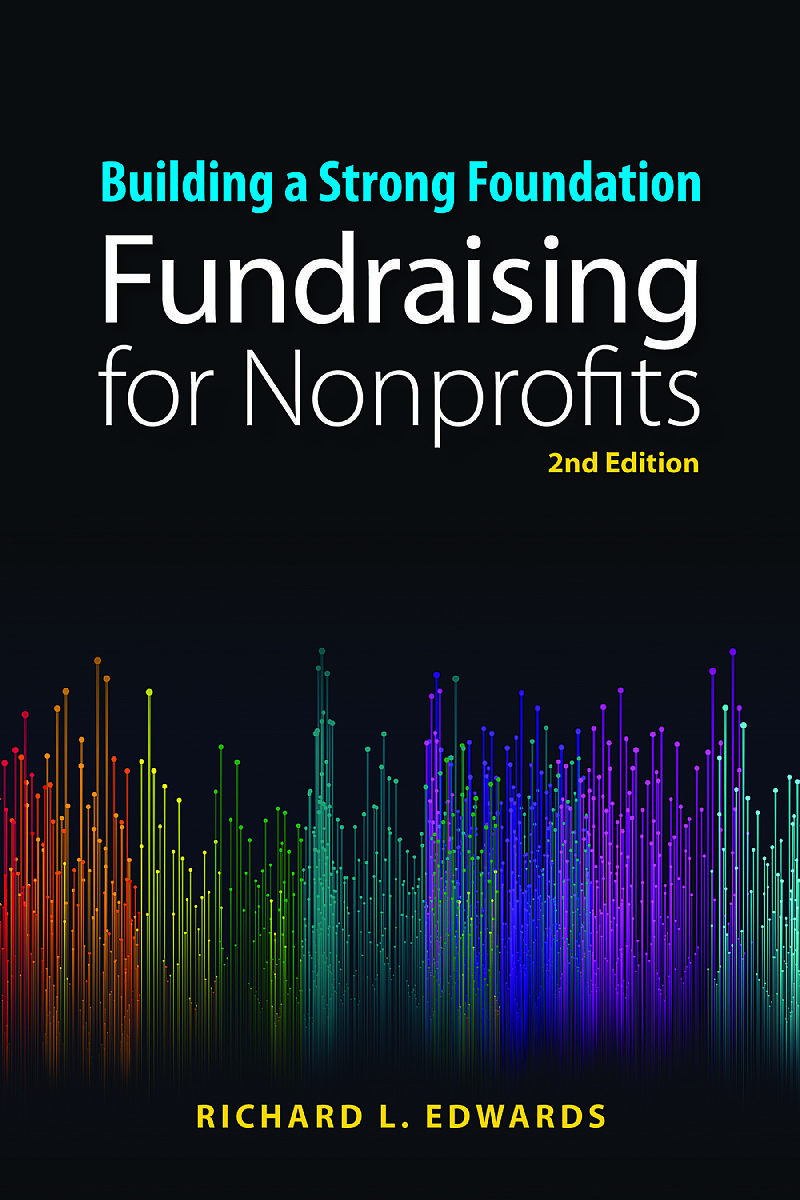
Building a Strong Foundation, 2nd Edition
Fundraising for Nonprofits
Author: Richard L. Edwards
Page Count: 224
ISBN: N/A
Published: 2020
Item Number: 5563
Price range: $33.99 through $39.99
NASW members receive 10% discount on books and eBooks by entering their membership number at checkout.
Can your device download this eBook? Click here before purchasing! eBooks are available in single quantities only.
Contemporary nonprofit organizations operate in a climate of financial insecurity. Cutbacks in government funding, with concomitant reductions in spending levels for many areas in which nonprofits are involved, such as the arts, education, environment, health, and human services, have created a more competitive environment for philanthropic dollars. Establishing a successful fundraising program ensures that your organization will not only survive, but also thrive in the years ahead.
Already serving a variety of roles within their organizations, executive directors, board members, and nonprofit managers are often charged with raising money. But where can they turn to for help?
The second edition of Building a Strong Foundation: Fundraising for Nonprofits is a concise, readable, and relevant guide for anyone seeking guidance on fundraising, from board members and nonprofit managers tasked with raising money to students who aspire to nonprofit development and leadership positions. This popular text provides a comprehensive overview of nonprofit fundraising, including a discussion of the current climate and patterns of giving; key elements in the process of fundraising, including prelaunch strategies, setting goals, and developing a gift pyramid; having confidence when soliciting legacy giving, mortality-based gift intentions, and complex gifts; effective prospect tracking, management, and communications that build long-term relationships; and the mutual benefits of cause-related marketing. This edition provides a modern approach to modern challenges, including social media risks and opportunities, e-mail solicitations, and the changing demographic of donors.
Ideally, fundraising is the process that builds a strong financial foundation for your nonprofit. Fundraising is an investment in your organization’s future that will result in a greater degree of permanence, stability, and competitive edge. As a profession, fundraising is a fast-growing field. Those who can demonstrate success in fundraising will find themselves highly marketable and reap the rewards both personally and professionally.
Preface
Acknowledgments
Chapter 1: The Context of Fundraising
Chapter 2: The Process of Fundraising
Chapter 3: Legacy Giving: Mortality-Based Gift Intentions and Complex Gifts
Chapter 4: Basics of Prospect Research: Identifying, Tracking, and Managing Your Prospects
Chapter 5: Special Events
Chapter 6: Cause-Related Marketing
Chapter 7: Putting It All Together: An Overview and Case Studies
Appendix: Resources for Nonprofit Fundraisers
References
Index
About the Author
Index
Those who are engaged in fundraising, whether staff or board members of nonprofit organizations and charitable causes, will find no shortage of advice on how to do their jobs effectively. Numerous books, journal articles, newsletters, blogs, and workshops exist, which provide instruction on everything from launching fundraising campaigns, to the art of identifying prospects, to cultivating and stewarding donors. Lots of information is available on how to write funding proposals for foundations and government grants, on setting up fundraising special events, on planned or legacy giving, and on other topics that comprise the fundraising arena.
Certainly, much of this information can be useful for the fundraising professional and for nonprofit board members. As a profession, fundraising—or development as it is sometimes called—is a fast-growing field. Essentially every college and university in the United States is continuously involved in fundraising, as is virtually every nonprofit organization. These days, if you can demonstrate success in fundraising, you are likely to find yourself highly marketable.
However, it also is true that many people involved with nonprofit organizations, whether staff or board members, do not know where to begin to look for help. They may be overwhelmed by the plethora and cost of published and online resource materials, and they are sometimes intimidated by the various aspects of the notion of asking people for money. Furthermore, many people charged with raising funds for nonprofits are serving their organizations in other roles. Particularly with smaller nonprofits, executive directors and board members may have to take on primary fundraising roles in addition to their other duties. This book was developed to be concise, readable, relevant, and useful both to those who are new to the world of nonprofit fundraising and to those who already have some experience in this field, no matter how many hats are worn.
In the course of many years of experience in fundraising, both with large and small organizations, I have concluded that two important principles should guide the efforts of every fundraiser. First, recognize that fundraising is a process, the core of which is developing and maintaining donor relationships that need to be nurtured over a long time. Second, understand that multifaceted fundraising strategies are required to ensure that your nonprofit organization has a strong foundation of longterm prosperity and fiscal stability.
The process of fundraising is dynamic and people driven. This book does not seek to provide you with a simple formula or a concrete step-by-step recipe. Rather, think about a recipe that has been handed down in a family over many generations and many years. Family members over the years may alter slightly or personalize the recipe to reflect individual tastes, but the basic ingredients remain unchanged. In fundraising, you must be creative in personalizing your approaches to donors, but at the same time you should keep in mind some time-tested truths. Many of the “truths” or strategies discussed in this book are connected in some way to the successful cultivation of a donor relationship. Others relate to the importance of maintaining diverse fundraising activities that (1) include both annual fund and major gift work; (2) encourage the cultivation of individual, foundation, and corporate donors; and (3) support the premise that building a strong foundation for your nonprofit takes time, resources, and good planning.
Included in this book is a chapter on legacy or mortality-based giving, often called planned giving. Nonprofits have much to gain by exploring with their donors how they can include your nonprofit in their will and other estate planning instruments. While some may find it daunting to think about talking to a donor about their mortality, even the novice fundraiser or nonprofit executive is likely to find the information and tips in this chapter to be relatable and useful.
Also included is a chapter on prospect research, an important area of fundraising that is often overlooked in the literature. Many experienced fundraisers will agree that good prospect research is an essential element in all fundraising programs. With widespread availability of online information technologies, prospect research is an area of growth.
Finally, the book explores special events and cause-related marketing as important components of a successful, multifaceted fundraising plan. These approaches to fundraising are viable tools to help your nonprofit succeed in raising dollars.
I sincerely hope you will find this book to be a useful resource, whether you already are engaged in raising money for nonprofit organizations and charitable causes or you are just getting started. I know from personal experience over many decades that success in fundraising has enormous rewards. Nothing can quite compare with the exhilarating joy that you feel when you help a donor realize a dream, memorialize a loved one, or make a heartfelt contribution to a worthy cause. I wish you many of those times.